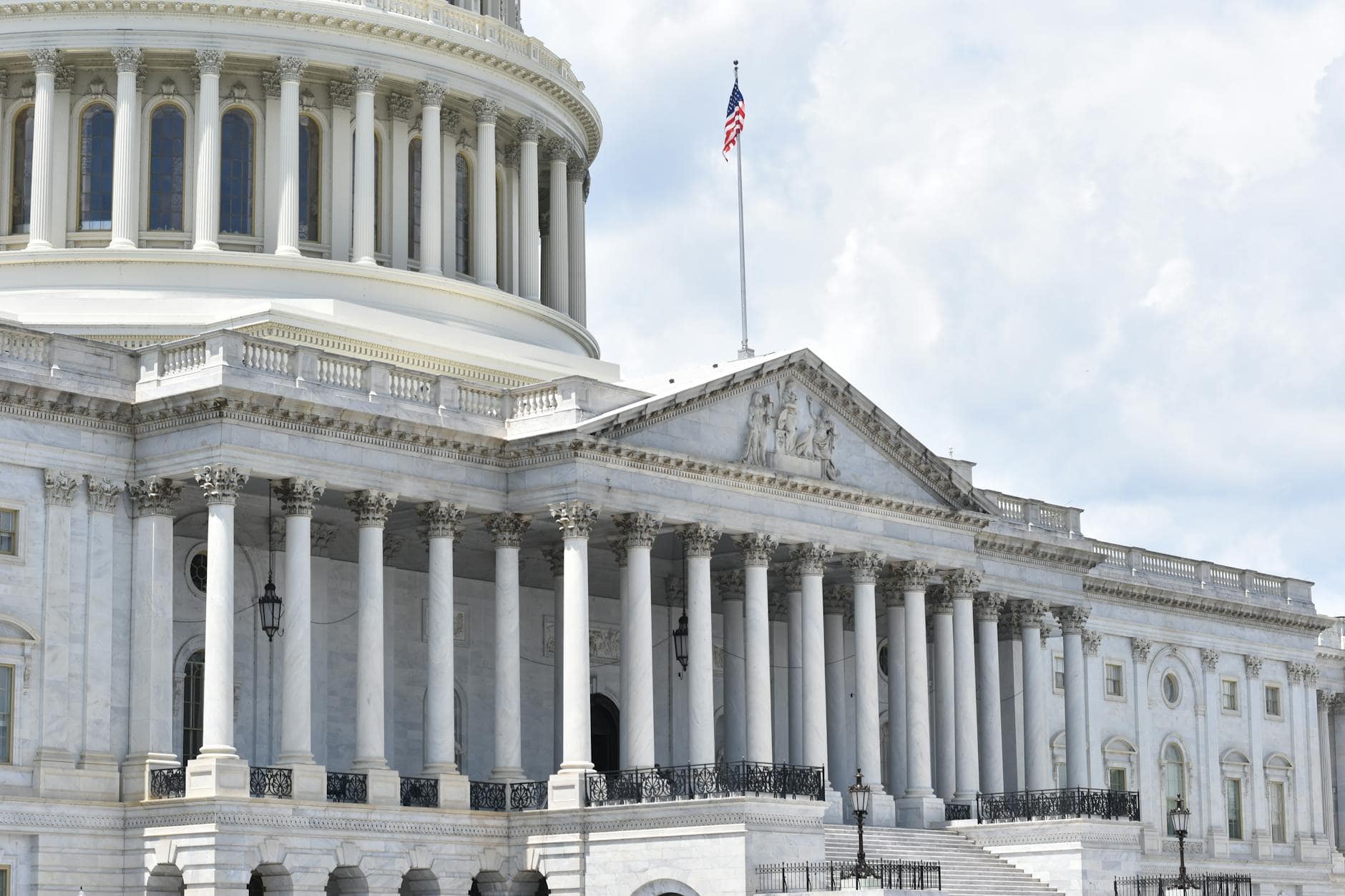
The U.S. national debt just crossed $39 trillion. It took the country 200 years to reach $1 trillion in debt. We’re now adding that much roughly every five months.
That number gets thrown around a lot, usually in political speeches, and most people tune it out. It’s too big to feel real. Let’s make it real first. Then, we will discuss why every small business owner should be paying attention to what comes next.
First, let’s put $39 trillion in perspective
The debt is growing at roughly $7.2 billion per day, about $83,000 per second. That’s not a rounding error. That’s the federal government spending more than it takes in, every single day, without pause.
Here are a few comparisons that help the number land:
The entire U.S. economy, every product sold, every service rendered, every dollar of GDP, totals about $29 trillion per year. The national debt is now bigger than the entire annual output of the American economy. The U.S. isn’t even projected to reach $40 trillion in annual GDP until 2032. We’re already past that in debt.
Broken down per household, the debt now works out to roughly $288,000, for every household in the country. Not per taxpayer. Per household.
And it’s accelerating. The Congressional Budget Office projects the federal deficit will hit $1.9 trillion in fiscal year 2026 alone. Federal debt held by the public will rise from 101% of GDP today to 120% by 2036. This increase would surpass the previous all-time high set at the end of World War II.
The part that doesn’t get enough attention: interest
The debt itself is one problem. The interest on the debt is becoming a separate crisis.
The U.S. paid roughly $970 billion in interest costs in 2025, approximately double what it paid just a few years prior. Interest payments are now the third-largest spending category in the federal budget, behind only Social Security and Medicare.
Net interest payments reached $270 billion in the first three months of the current fiscal year. This amount has already surpassed the nation’s defense spending for the same period. We’re spending more to service our debt than to fund the entire military.
The CBO projects net interest payments will total $16.2 trillion over the next decade, rising from $1 trillion annually today to $2.1 trillion per year by 2036. To put that in context: that’s money that cannot go toward infrastructure, small business programs, tax relief, or anything else. It just services the debt.
Over the next 30 years, the government is projected to spend nearly $100 trillion on interest alone.
So what does this mean for your business?
This is where most national debt coverage stops, at the scary macro numbers. The real question entrepreneurs and small business owners face is different. How does a government debt problem become my business problem? The honest answer is: in several ways, and the timeline is shorter than most people think.
Higher borrowing costs
When the federal government borrows trillions of dollars, it competes in the same capital markets where businesses borrow. When the government borrows in financial markets, it competes with other participants for funds. That competition pushes up interest rates. It also crowds out private investment.
As of early 2026, benchmark rates remain elevated compared to pre-2022 levels, and commercial loan rates reflect tighter credit conditions. That’s partly Fed policy, but it’s also a structural consequence of the government soaking up so much available capital. If you’re financing equipment, carrying a line of credit, or thinking about expansion, you’re already feeling this. It doesn’t get better as the debt grows.
Persistent inflation pressure
We covered how inflation works and how it’s measured in our CPI guide. The connection to federal debt is clear. Higher debt exacerbates inflationary pressures. It squeezes out investment in the economy. It could also provoke a fiscal crisis. The CBO now projects inflation from 2026 to 2029 will be higher than previously forecast. For small business owners, inflation isn’t just a consumer problem, it’s a cost-of-goods problem, a payroll problem, and a pricing strategy problem all at once.
Tax increases or benefit cuts, probably both
The math on the debt eventually forces one of two outcomes: the government raises revenue (taxes) or cuts spending (programs). Most economists expect a combination. Either path creates headwinds for small business owners. Higher taxes directly compress margins. Cuts to programs like SBA lending, small business development centers, or workforce training reduce the support infrastructure. Many entrepreneurs rely on this infrastructure. Higher debt levels imply higher interest payments. These payments create costs for future taxpayers. The costs may come in the form of higher taxes, lower government benefits, higher inflation, or increased risk of fiscal crisis.
Dollar risk over the long run
This is the longer-horizon scenario, and it’s worth taking seriously without catastrophizing. The U.S. dollar functions as the world’s reserve currency, a status that allows the U.S. to borrow cheaply and maintain financial stability. The CBO has warned that if federal debt continues to grow faster than GDP, it could erode investors’ confidence in the U.S. fiscal position. Concerns about the government’s fiscal situation could lead to a sudden rise in inflation expectations. It could also cause a drop in the value of the dollar.
For small business owners who import goods, hold dollar-denominated contracts, or price services in USD, a meaningful loss of dollar confidence would be a significant shock. It would have a considerable impact on their operations. It’s not inevitable, but it’s not theoretical either.
What’s the actual outlook?
Budget experts across the political spectrum largely agree: the debt is on an “unsustainable” trajectory. Under current law, federal debt is projected to reach 175% of GDP over the next two decades, a level with no peacetime precedent in U.S. history.
The political will to address it is a separate question. Both parties have contributed to the problem, and neither has shown a credible commitment to solving it. Practically, this means the structural pressures described above will likely be persistent. Higher rates, inflation risk, and tax policy uncertainty are expected to be the background conditions for running a business in America for the foreseeable future.
None of this means doom. American businesses have navigated worse. Entrepreneurs who build durable companies in this environment will thrive. They will understand the macro forces at work, not just the day-to-day. If you want to understand the broader economic engine your business operates inside, our piece on how the economy actually works is a good place to start.
Sources: U.S. Congress Joint Economic Committee Monthly Debt Update (Jan & Mar 2026) • U.S. Treasury Fiscal Data • Congressional Budget Office Budget & Economic Outlook 2026–2036 • Congressional Budget Office Long-Term Budget Outlook 2025–2055 • Committee for a Responsible Federal Budget • Peter G. Peterson Foundation Monthly Interest Tracker • Fortune (March 2026) • Bipartisan Policy Center Deficit Tracker
Related Posts: Tariffs 101 | Military-Industrial Complex in 2026 | I-Bonds Explained | What Are Pension Funds