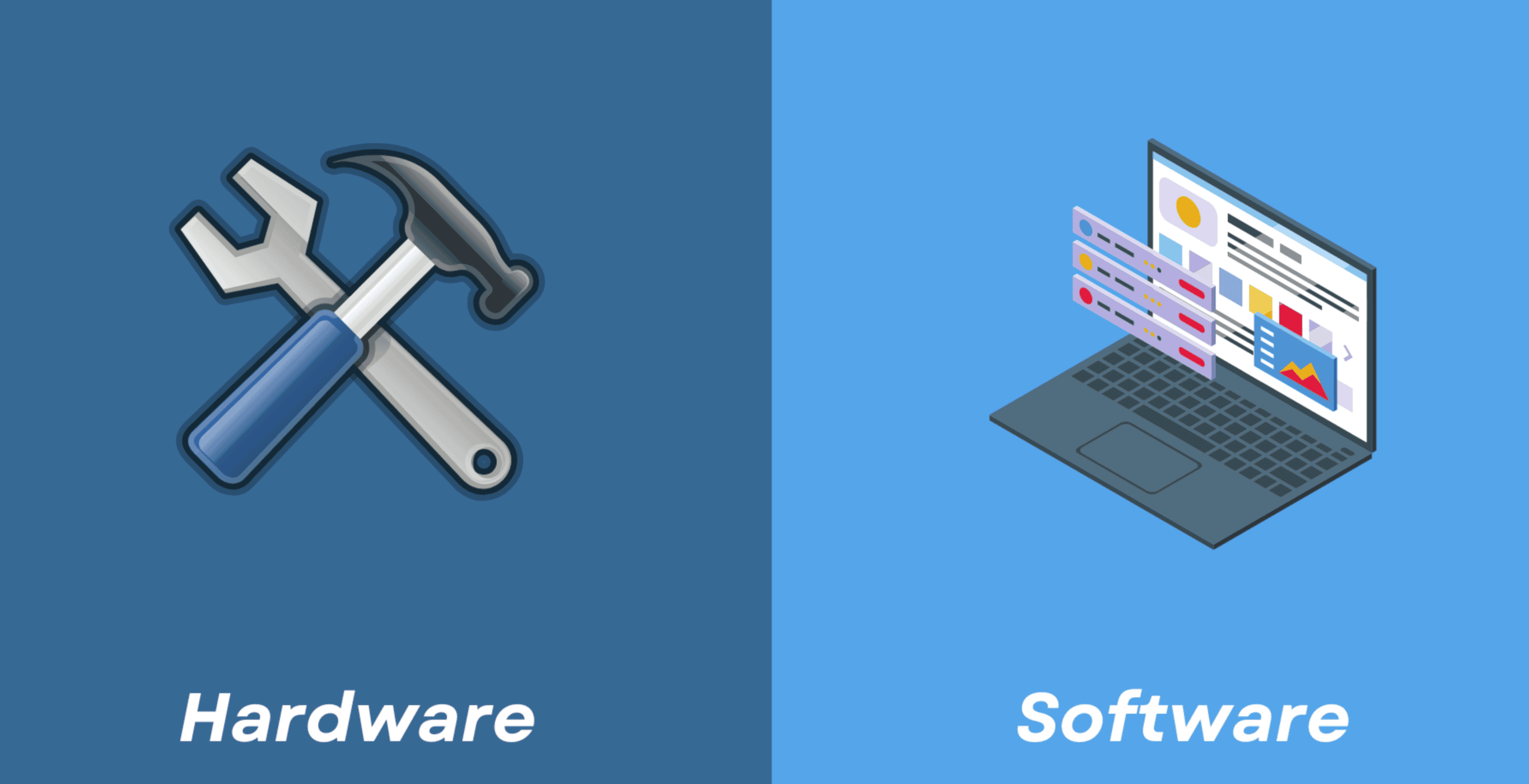
Which Business Model Delivers Better Profit Margins?
Before you build a physical product or ship a line of code, the profit math should be driving the decision.
I have run software companies and more recently a hardware company. Both can be lucrative (think Apple vs Google) but they are very different in terms of gross margin and the capital needed to get off the ground.
In fact, the average software company keeps 70 to 85 cents of every dollar in gross profit. The average hardware company keeps 30 to 50. That gap does not close with smarter operations or sharper pricing; it is structural, baked into the fundamental economics of atoms versus bits.
For small business owners and entrepreneurs deciding which model to pursue, gross margin is the number that deserves the most attention. It determines how much room you have to grow, hire, market, and eventually exit.
Why Software Margins Are Structurally Higher
Software has near-zero marginal cost. Once the code is written, selling a second license costs essentially nothing. No raw materials, no manufacturing run, no warehouse, no shipping, no warranty claims.
Hardware works the opposite way. Every unit sold requires materials, production, logistics, and post-sale support. Those costs do not disappear with scale; they get optimized at the margins, slowly.
The result: software companies in systems and applications average roughly 71% gross margins. Computer hardware companies average around 35% gross and just 4% net, after overhead eats the rest. Mature SaaS businesses often land between 15 and 25% net. Most hardware businesses are fighting to stay above 10%.
DailyDime Comparison
| Metric | Software / SaaS | Hardware / Physical |
|---|---|---|
| Gross Margin | 70 – 85%+ | 30 – 50% |
| Net Margin (mature) | 15 – 25%+ | 4 – 10% |
| Marginal Cost per Sale | Near zero | Materials + logistics every unit |
| Startup Capital Required | Low | High |
| Revenue Model | Recurring (subscription) | One-time (or slow repeat) |
| Competitive Moat | Network effects, switching costs | Patents, supply chain, distribution |
| Scalability | High — cost doesn’t scale with revenue | Limited — COGS scales with units |
| Inventory Risk | None | Significant |
| Typical Exit Multiple | Higher revenue multiples | Lower revenue multiples |
Sources: Industry benchmarks, 2025-2026 averages. Results vary by company and execution.
Sources: Industry benchmarks, 2025-2026 averages. Results vary by company and execution.
The Software Case: Scalability and Recurring Revenue
Beyond margins, software has a compounding advantage in business model design. Subscription pricing (SaaS) creates predictable, recurring revenue that builds month over month without a proportional increase in cost.
A software product that acquires 1,000 customers and retains them for three years generates far more lifetime value than a hardware product with a one-time purchase and high churn from warranty and support friction. Investors price that difference into valuations; software businesses routinely sell for higher multiples than hardware peers.
Customer acquisition is the key cost to manage. Marketing and sales can devour early margins if not controlled. The businesses that win in software typically build organic growth engines (content, SEO, and referral loops) before leaning hard on paid channels.
The Hardware Case: Tangibility and Competitive Moats
Hardware is not without real advantages. Physical products are harder to copy quickly. Manufacturing relationships, patents, and distribution networks create barriers that a competitor cannot replicate with a GitHub repo.
Premium physical goods, including specialized tools, medical devices, and industrial equipment, can command pricing that software cannot always match. Customers who buy something they can hold tend to have lower churn than SaaS customers who cancel subscriptions.
Brand equity compounds differently in hardware. Apple built one of the most valuable companies in history on the strength of physical products. The key is that Apple layered software and services on top, which brings us to the most important strategic move available to hardware entrepreneurs.
The Hybrid Model: Where the Real Opportunity Lives
The smartest hardware businesses today treat the physical product as a door opener and build margin through recurring software, data, or consumable revenue. The printer-and-ink model has been canonical for decades: sell the device near cost, then make real money on consumables and services.
Connected devices follow the same logic. A smart piece of equipment sold with a monthly subscription generates predictable cash flow and builds customer lifetime value in a way that a one-time hardware purchase cannot.
For entrepreneurs building in this space, the question is not hardware or software; it is how quickly you can attach a recurring revenue layer to the physical product. That is where the margin and the exit multiple live.
Running the Numbers Before You Build
The margin comparison matters most when you are still deciding what to build. A few inputs worth calculating before you commit:
- Customer acquisition cost (CAC): What it costs to land one customer, across all channels.
- Gross margin target: Software businesses should aim for 70%+. Hardware businesses need to model at least 30%, and should stress-test for returns, defects, and logistics costs adding 20 to 30% to COGS.
- Customer lifetime value (LTV): Recurring revenue makes LTV dramatically higher. A software customer paying $100 per month for three years is worth $3,600. A hardware customer who buys a $300 product once is worth $300.
- Exit multiple: If you are building to sell, software businesses typically command higher revenue multiples than hardware peers with comparable growth rates.
No-code platforms like WordPress and Stripe have lowered the floor on software development significantly. If you can validate a software idea with minimal capital before committing to a hardware roadmap, that test is worth running.
The Bottom Line
Software wins on margin, scalability, and exit value in most scenarios. Hardware wins in markets where physical complexity creates real competitive barriers, especially when a software or subscription layer is attached to capture recurring revenue.
The businesses that have figured this out do not think of themselves as hardware companies or software companies. They think of themselves as margin companies. The model is just the vehicle.
As AI tooling continues to drive down software development costs, the window to build a software layer on top of a hardware product has never been cheaper to open.
Related Posts: Creative Destruction – Why Netflix beat Blockbuster | Tracking Online Sales Tax | Razor-and-Blades Model | Profit Margins by Industry | Best-Selling Golf Balls | The Physical World Comeback | EV/Sales Multiples