Schumpeter called it capitalism’s “perennial gale.” Two hundred years of data show he was right, and it’s accelerating.
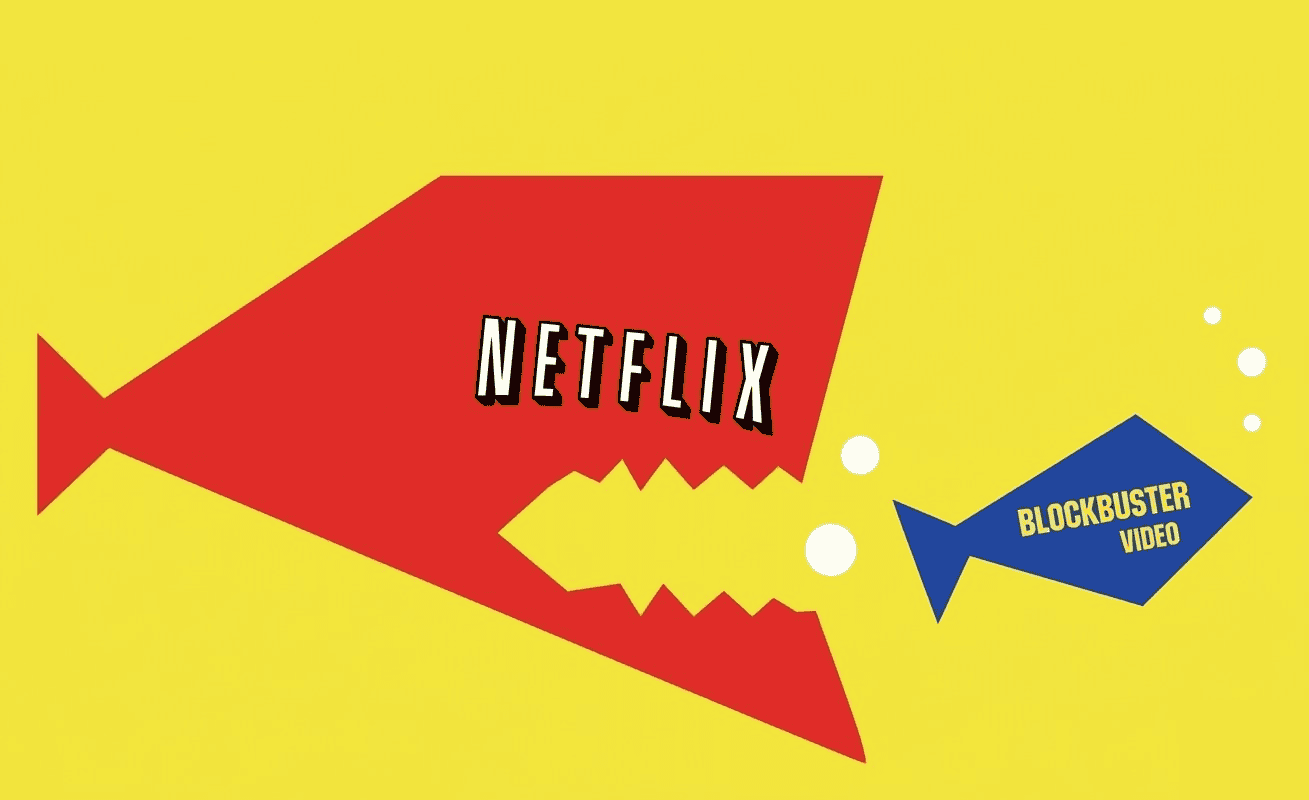
Blockbuster had 9,000 stores, 60,000 employees, and a chance to buy Netflix for $50 million in 2000. It passed. Ten years later, Blockbuster was in bankruptcy court. Netflix today has more than 280 million subscribers worldwide.
That sequence isn’t a story about bad strategy or arrogant executives, though both were present. It’s a textbook case of creative destruction, the most powerful and least understood force in capitalism, doing exactly what it’s designed to do.
Every founder and investor operating right now is somewhere on that curve. The question is which side.
What Creative Destruction Actually Means
Austrian economist Joseph Schumpeter popularized the term in his 1942 book Capitalism, Socialism and Democracy. He described it as “the process of industrial mutation that incessantly revolutionizes the economic structure from within, incessantly destroying the old one, incessantly creating a new one.”
Strip away the academic language and it’s simple: entrepreneurs introduce new products, technologies, and business models that make existing ones obsolete. Old industries shrink or disappear. Capital, labor, and resources shift toward more productive uses. Repeat indefinitely.
Schumpeter drew from Karl Marx’s observations about capitalism’s turbulence but arrived at a different conclusion. Where Marx saw inevitable collapse, Schumpeter saw perpetual renewal. The gale wasn’t a flaw in the system. It was the system working exactly as intended.
The Case Studies That Make It Real
Blockbuster is the most spectacular example of the last 25 years, but it’s far from the only one.
Kodak actually invented the digital camera in 1975, then shelved it to protect its film business. That decision didn’t save the film business. It just delayed the reckoning. Kodak filed for bankruptcy in 2012 while consumers were shooting billions of photos per year on smartphones for free. The company chose the comfort of the existing model over the survival of the enterprise.
Montgomery Ward and Sears dominated American retail for generations. Their catalogs were the Amazon of their era, and their stores were the center of communities across the country. Amazon and e-commerce didn’t just take market share; they restructured the entire logic of how retail works. Both Wards and Sears are effectively gone.
Go back further and the scale is even more striking. The horse-and-buggy industry in the late 1800s employed vast ecosystems of blacksmiths, stable owners, and carriage makers. Henry Ford’s assembly line and the internal combustion engine rendered them largely obsolete. What emerged in their place was the modern auto industry, the highway system, suburban development, and an entirely new geography of American life.
The destruction in each case was real and painful. The creation that followed was larger by an order of magnitude.
Why the Destruction Is Actually Productive
This is where creative destruction separates from plain old business failure. The destruction is not the point. The reallocation is.
When Blockbuster’s 9,000 stores closed, the capital and labor tied up in physical inventory, real estate, and late-fee processing systems didn’t disappear. It moved. Engineers went to work on streaming infrastructure and recommendation algorithms. Retail space got repurposed. Consumer spending shifted toward services that delivered more value per dollar. The resources didn’t evaporate; they found higher-value uses.
That reallocation is the mechanism behind long-run productivity growth. Economies that slow it down with subsidies, protectionism, or bailouts for failing industries don’t eliminate the disruption. They defer it while trapping capital in low-value uses and slowing the emergence of better ones. The debate over tariffs is, at its core, a debate about how much creative destruction a society is willing to accept in the short term to preserve long-term dynamism.
The productivity gains compound in ways that are genuinely difficult to internalize. A 19th-century American factory worker spent roughly half their income on food. Today, the average American spends about 10 percent. That gap is not luck. It is the accumulated output of every disrupted supply chain, every obsolete distribution model, and every replaced technology in the history of agriculture, food processing, and retail, going back generations.
The AI Wave Is Different in Scale, Not in Kind
Every previous wave of creative destruction was sector-specific. Automobiles disrupted transportation. The internet disrupted media, retail, and communications. AI is disrupting everything simultaneously.
Generative AI tools are already reshaping writing, design, customer service, legal research, financial analysis, and software development at the same time, compressing into years what previous disruptions took decades to accomplish. We’ve covered which careers and business models are best positioned to survive it, and the short answer is: roles requiring genuine human judgment, creativity, and relationship capital hold up. Roles built around routine processing of information do not.
For entrepreneurs, the speed of this wave matters as much as the direction. The standard playbook for responding to disruption assumes a 5- to 10-year window to adapt. Many industries facing AI pressure don’t have that runway. Gen Z and millennials who are leaving traditional employment to build companies are, in many cases, intuiting this correctly. The question isn’t whether disruption is coming. It’s whether you’re the one delivering it.
The Honest Costs
Creative destruction produces clear winners and diffuse losers, and it’s worth being honest about that.
Consumers benefit from better, cheaper goods and services. Innovators generate enormous wealth. The economy as a whole grows faster than it would under protected stasis. Those gains are real and well-documented.
Workers in disrupted industries absorb the costs first, often without the resources or geographic flexibility to move quickly. Coal miners, travel agents, telephone operators, film processors, and video store clerks each absorbed a disruption wave that produced massive gains for consumers and investors and significant dislocation for them personally. The economics weren’t wrong. The adjustment period is just faster than a human career.
The policy response that makes sense isn’t to slow the disruption. It’s to build better bridges: stronger education systems, real retraining programs, and the kind of financial literacy that equips people to navigate multiple career transitions rather than betting everything on one skill set lasting 40 years.
What This Means If You’re Building or Investing
Every business eventually becomes the incumbent in someone else’s disruption story. The relevant question is whether you’re building the new model or defending the old one.
For founders, creative destruction is a strategic lens more than a philosophical framework. The most fundable companies are the ones that draw a credible line from a dying incumbent to a new model with better unit economics. That’s not just a narrative for a pitch deck; it’s an economic argument that capital flowing out of the old model will flow toward you. The mechanics of how that capital actually moves through venture and angel structures matters for how you position your raise.
For angel investors, the best opportunities tend to cluster at the beginning of a disruption wave rather than the middle or end. Early-stage deals in a new cycle carry the highest risk but also the most asymmetric upside, which is precisely why the math behind angel fund economics requires a power-law mentality. A few very early bets on the right disruption matter more than many reasonable bets on its second-order effects.
For everyone building or backing companies, the most durable takeaway from Schumpeter’s work is structural: the gale of creative destruction is permanent. There is no stable ground. Firms and people who treat adaptation as a core competency rather than a crisis response will consistently outperform those who don’t.
The Bottom Line
Nothing lasts forever in the economy because nothing is supposed to. The impermanence is the feature, not the bug.
Creative destruction is capitalism’s quality-control mechanism, clearing out what no longer works to make room for what works better. Schumpeter understood this in 1942. Every decade since has reinforced it. S&P 500 company tenure is shrinking. Industry disruption is compressing. The gale is getting stronger, not weaker.
The entrepreneurs and investors who grasp this aren’t just watching the landscape change. They’re building on the right side of it before everyone else figures out which side that is.