Ever wonder what separates the investing legends from everyone else? These masters of the market didn’t just beat the odds, they rewrote the rules.
When it comes to investing, most of us would be thrilled to match the market’s average 10% annual return. But the investors on this list? They absolutely crushed it, some achieving returns that seem almost impossible.
From mathematicians who cracked the market’s code to value investors who bought what everyone else ignored, these financial titans built fortunes by seeing opportunities others missed. Even better? Each one left behind lessons we can actually use.
Let’s dive into the hall of fame of investing greatness, ranked by their mind-blowing annual returns.
#1: Jim Simons – The Quant King

The Numbers:
- 66% average annual return (before fees) from 1988-2018
- 39% net of fees
- Turned the Medallion Fund into the most successful hedge fund in history
Who Is He?
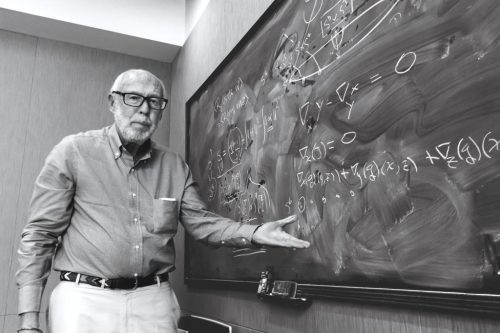
Jim Simons wasn’t your typical Wall Street trader, he was a world-class mathematician and former codebreaker. Instead of reading financial statements, he hired physicists and mathematicians to build algorithms that could detect patterns invisible to the human eye.
The Secret Sauce:
Simons pioneered quantitative trading, using complex mathematical models to make thousands of trades per day. While most investors were reading earnings reports, Renaissance was analyzing petabytes of data looking for tiny, repeatable inefficiencies in the market.
What You Can Learn:
- Data beats gut feelings – Simons proved that systematic, emotion-free investing outperforms “going with your gut”
- Specialize in what you know – He used his mathematical expertise rather than trying to be a traditional investor
- Fees matter – Even with a 66% gross return, fees took a massive bite (though 39% net is still incredible)
#2: Joel Greenblatt – The Magic Formula Master

The Numbers:
- 40% average annual return over 20+ years
- Never had a down year in his first two decades
- Turned $7 million into $700 million
Who Is He?
Greenblatt started managing money in 1985 and proceeded to have one of the most impressive runs in investing history. He later became famous for creating the “Magic Formula”, a simple strategy that anyone can use.
The Secret Sauce:
Greenblatt focused on buying good companies at bargain prices. His “Magic Formula” ranks stocks by two factors: return on capital (how efficiently a company makes money) and earnings yield (how cheap the stock is relative to earnings).
What You Can Learn:
- Simple can be powerful – His Magic Formula uses just two metrics
- Quality + Value = Returns – The combination of good businesses at good prices is hard to beat
- Patience pays – He held positions for years, not months
- You can do this too – He literally wrote a book called “The Little Book That Beats the Market” explaining his approach
#3: George Soros – The Man Who Broke the Bank of England

The Numbers:
- 30%+ average annual return as lead manager
- Made $1 billion in a single day shorting the British pound (1992)
- Turned Quantum Fund into one of the world’s most successful hedge funds
Who Is He?
George Soros is a Hungarian-American investor known for making massive, high-conviction bets on macroeconomic trends. His legendary trade against the British pound earned him the title “The Man Who Broke the Bank of England.”
The Secret Sauce:
Soros practiced “reflexivity”, the idea that investor perceptions can actually change market fundamentals, creating feedback loops. He looked for major imbalances in currencies, commodities, and markets, then bet big when he saw opportunity.
What You Can Learn:
- Conviction matters – When you have strong conviction, size your bets accordingly
- Markets can be wrong – Sometimes consensus is completely off base
- Cut losses quickly – Soros was famous for exiting positions fast when proven wrong
- Global thinking – Don’t limit yourself to just US stocks
#4: Peter Lynch – The Stock-Picking Legend

The Numbers:
- 2% annual return during his 13-year run (1977-1990)
- Grew Magellin from $20 million to over $14 billion
- Beat the S&P 500 in 11 of 13 years
Who Is He?
Peter Lynch is arguably the most famous mutual fund manager ever. He popularized the idea that ordinary investors could beat professionals by investing in what they know, companies they encounter in everyday life.
The Secret Sauce:
Lynch was a research machine who visited companies, kicked tires, and talked to management. He coined phrases like “invest in what you know” and looked for “ten-baggers”, stocks that could return 10x your investment.
What You Can Learn:
- Do your homework – Lynch sometimes followed 1,400+ stocks
- Look around you – He found winners at the mall, not just in annual reports
- Stay invested – “Far more money has been lost by investors preparing for corrections than has been lost in corrections themselves”
- Understand what you own – If you can’t explain why you own a stock to a 10-year-old, you shouldn’t own it
#5: Warren Buffett – The Oracle of Omaha

The Numbers:
- 8% annual return from 1965-2022
- Doubled the S&P 500’s 9.9% return over the same period
- Turned $100 invested in 1965 into over $3.7 million by 2022
Who Is He?
Warren Buffett is the most famous investor alive. Born in Omaha, Nebraska, he bought his first stock at age 11 and filed his first tax return at 13. Today he’s worth over $100 billion and is widely considered the greatest investor of all time, not just for returns, but for consistency and longevity.
The Secret Sauce:
Buffett is a value investor who buys great businesses at fair prices and holds them forever. He looks for companies with “moats”, sustainable competitive advantages, and invests in industries he understands.
What You Can Learn:
- Time is your friend – A 19.8% return for 58 years compounds to absolutely massive wealth
- Be patient – His favorite holding period is “forever”
- Circle of competence – Stick to what you understand (he famously avoided tech stocks for decades)
- Buy when others are fearful – Some of his best investments came during market crashes
#6: Benjamin Graham – The Father of Value Investing

The Numbers:
- Approximately 20% annual return during his investment partnership years
- Never had a losing year in his partnership from 1936-1956
- His book influenced every value investor who came after
Who Is He?
Benjamin Graham literally wrote the book on investing, two of them, actually. “Security Analysis” (1934) and “The Intelligent Investor” (1949) are still considered the bibles of value investing. He was also Warren Buffett’s professor and mentor at Columbia University.
The Secret Sauce:
Graham pioneered the concept of “intrinsic value”, what a company is truly worth based on its assets and earnings. He looked for stocks trading below their intrinsic value, providing a “margin of safety.” His approach was quantitative and disciplined, focusing on buying assets for less than they were worth.
What You Can Learn:
- Price vs. Value – Price is what you pay, value is what you get
- Margin of safety – Always buy with a cushion for error
- Market – Treat market fluctuations as your servant, not your master
- Be defensive – Preserving capital is as important as growing it
- Do the math – Graham used specific formulas and criteria, not hunches
#7: Michael Steinhardt – The Hedge Fund Pioneer

The Numbers:
- 24% compound annual return over 28 years
- More than double the S&P 500’s return during the same period
- Never had a down year in his first 19 years
Who Is He?
Steinhardt was one of the first hedge fund managers and helped define what aggressive, research-intensive investing looked like. He was known for his intense focus, contrarian thinking, and willingness to make concentrated bets.
The Secret Sauce:
Steinhardt practiced “variant perception”, finding situations where his view differed from consensus and he had conviction he was right. He combined deep research with the willingness to bet against the crowd.
What You Can Learn:
- Have an edge – Don’t invest unless you know something the market doesn’t
- Concentration can work – If you have conviction, don’t over-diversify
- Research obsessively – Steinhardt was known for reading everything
- Contrarian thinking pays – The best opportunities often look wrong to everyone else
#8: Charlie Munger – Buffett’s Brilliant Partner

The Numbers:
- 8% annual return from 1962-1975
- Outperformed the Dow by nearly 14 percentage points annually
- Later became Vice Chairman of Berkshire Hathaway
Who Is He?
Charlie Munger was Warren Buffett’s longtime business partner and the “yin to his yang.” While Buffett was the face of Berkshire Hathaway, Munger was the sharp-minded vice chairman who pushed Buffett toward buying great businesses at fair prices rather than just cheap stocks.
The Secret Sauce:
Munger advocated for a multidisciplinary approach to investing, using mental models from psychology, physics, biology, and other fields. He focused on quality businesses with pricing power and strong management.
What You Can Learn:
- Think in systems – Use mental models from multiple disciplines
- Invert problems – Ask “How could I guarantee failure?” then avoid those things
- Quality over price – “It’s far better to buy a wonderful company at a fair price than a fair company at a wonderful price”
- Read constantly – Munger was famous for being a “learning machine”
#9: Seth Klarman – The Cautious Contrarian

The Numbers:
- 20% average annual return since 1983
- Managed approximately $30 billion at peak
- Achieved these returns while often holding 40%+ in cash
Who Is He?
Seth Klarman is one of the most respected value investors alive. He’s known for his patience, discipline, and willingness to hold massive amounts of cash when he can’t find bargains. His book “Margin of Safety” is so sought-after that used copies sell for thousands of dollars.
The Secret Sauce:
Klarman is a pure value investor who only buys when he sees significant upside with limited downside. He’s willing to hold cash for years waiting for opportunities, and he focuses on distressed debt, spinoffs, and other situations Wall Street ignores.
What You Can Learn:
- Cash is a position – It’s okay to wait for opportunities
- Risk management first – Focus on what you could lose, not just what you could gain
- Be patient – Don’t force trades just to be invested
- Look where others won’t – Distressed situations and complexity create opportunity
#10: David Swensen – The Endowment Innovator

The Numbers:
- 7% compound annual return over 36 years (1985-2021)
- Grew Yale’s endowment from $1 billion to over $42 billion
- Outperformed nearly every other institutional investor
Who Is He?
David Swensen revolutionized how endowments and institutions invest. Before Swensen, endowments were mostly in stocks and bonds. He pioneered the “Yale Model,” which emphasized alternative investments like private equity, real estate, and hedge funds.
The Secret Sauce:
Swensen created a diversified portfolio that minimized correlation between assets. He allocated heavily to alternatives that most institutions ignored, maintained discipline during market swings, and focused on long-term results rather than quarterly performance.
What You Can Learn:
- Diversification works – But true diversification means assets that don’t move together
- Think long-term – Swensen had a multi-decade horizon
- Rebalance systematically – Sell what’s done well, buy what’s down
- Low costs matter – He advocated index funds for individual investors
The Common Threads: What All Great Investors Share
Looking across these legends, certain patterns emerge:
1. **Discipline Beats Emotion**
Every single one of these investors had a system and stuck to it, even when it was uncomfortable.
2. **They Played Their Own Game**
Simons used math. Buffett used value. Lynch used research. None tried to copy someone else’s approach.
3. **Patience is Mandatory**
Whether it’s Klarman holding cash or Buffett holding Coca-Cola for decades, the best investors think in years, not months.
4. **They Read Constantly**
Buffett reads 500 pages a day. Munger calls himself a “learning machine.” Knowledge compounds like returns.
5. **Risk Management Came First**
Graham’s margin of safety, Buffett’s “don’t lose money,” Klarman’s cash positions, protecting capital mattered more than home runs.
6. **They Had Conviction**
When they found opportunity, they bet big. Diversification is for people who don’t know what they’re doing (as Buffett says).
What This Means For You
You’re probably not going to average 66% returns like Jim Simons, his strategy requires Ph.D. mathematicians and supercomputers. But you absolutely can learn from these masters:
The Bottom Line
The investors on this list didn’t beat the market by luck, they did it through discipline, hard work, and thinking differently than everyone else. Some used complex mathematics, others used simple value principles. But all of them prove that exceptional returns are possible with the right approach.
The good news? You don’t need to be a genius or have millions to start. Begin with the principles these legends teach, stay disciplined, and let compound interest work its magic.
Related Posts: Angel Investing 101 | Inflation Math is Wrong