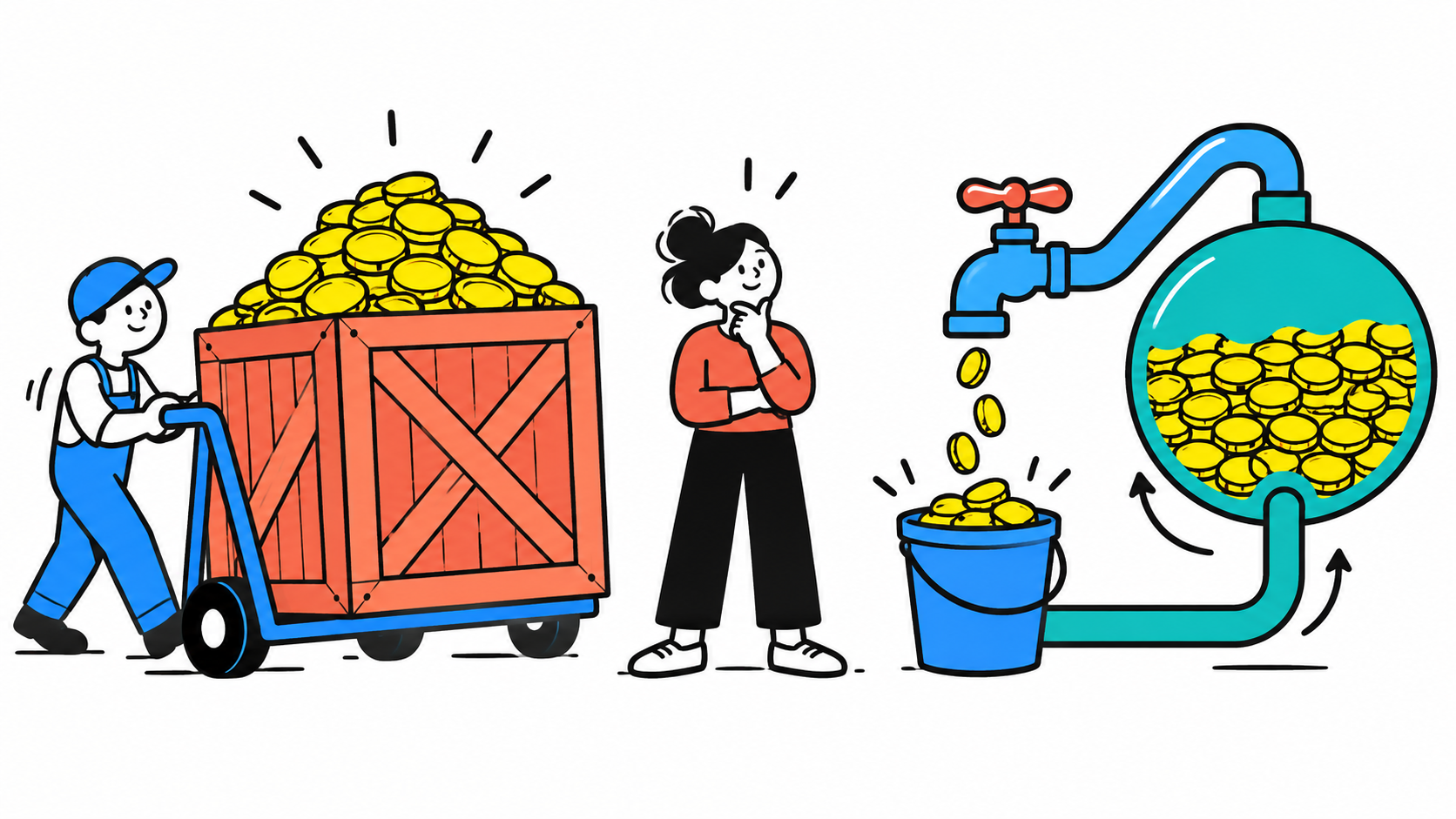
A term loan gives your business one lump sum. A line of credit gives it a reusable borrowing limit. That is the core difference in the term loan vs. line of credit decision.
A term loan fits a known, long-term cost. A line of credit fits short-term needs that rise and fall. The best choice depends on how fast you will use the money, how long you will need it, and whether your cash flow can carry the payment in a weak month.
The rate matters. The structure matters more.
Term Loan vs Line of Credit at a Glance
Feature | Term loan | Line of credit |
Funding | One lump sum at closing | Draw as needed up to the credit limit |
Reuse | No. A new loan usually needs a new application. | Yes. Repayment restores available credit on a revolving line. |
Interest | Charged on the outstanding loan balance from funding | Usually charged only on the amount drawn |
Payment | Often a scheduled principal and interest payment | Changes with the balance, rate, and lender rules |
Rate | May be fixed or variable | Often variable |
End date | Has a stated maturity date | May revolve, but often faces renewal or review |
Best fit | A planned purchase with a known cost and useful life | Short-term, repeating, or uneven working-capital needs |
Main risk | A fixed payment continues during a weak month | The lender may reduce, freeze, or decline to renew the line |
Fees | Origination, closing, and possible prepayment fees | Annual, draw, maintenance, or unused-line fees |
How a Term Loan Works
A term loan funds once. The lender sends the full amount at closing, and you repay it over a set period. The loan has a maturity date, which is the date the remaining balance must be paid.
Many term loans use monthly principal and interest payments. Some start with interest-only payments, use a variable rate, or leave a balloon payment at the end. Read the payment schedule, not just the headline rate.
Interest begins after the loan is funded. If you borrow $300,000 and leave $100,000 in the bank for six months, you still pay interest on the funded balance. That unused cash is expensive.
When a Term Loan Fits
A term loan works best when the cost is known and the benefit lasts at least as long as the debt. Common uses include:
- Buying equipment or a vehicle
- Building or remodeling a location
- Buying another business
- Refinancing existing debt
- Funding a project with a clear budget and payoff plan
Match the repayment term to the asset. Financing a machine over five years can make sense if the machine should produce cash for five years. Funding a two-month inventory gap with five years of debt can leave you paying for inventory that sold long ago.
How a Business Line of Credit Works
A business line of credit gives you a limit, not a lump sum. If the limit is $100,000, you might draw $25,000, repay $10,000, and draw again later. On a revolving line, repayment restores that part of the limit.
You usually pay interest only on the amount drawn. The payment can change as the balance or rate changes. Some lines require principal payments each month. Others allow interest-only payments for a period. A few require a yearly cleanup, which means the balance must fall to zero for a set number of days.
The line may stay open, but it is not permanent cash. The lender can review it, lower the limit, freeze new draws, or decline to renew it. That risk matters because a line is most valuable when the business is under pressure.
When a Line of Credit Fits
A line of credit works best for short-term needs that repeat or change in size. Common uses include:
- Buying inventory before a busy season
- Covering payroll while customers pay invoices
- Funding purchase orders or contracts
- Managing a short cash-flow gap
- Keeping a backup source of working capital
A line should bridge a timing gap, not hide a business that loses money every month. If the balance never falls, the business may have a permanent funding need. That may call for a term loan, equity, lower spending, or a better margin.
The Cost Difference Is More Than the Rate
Owners often compare two interest rates and stop. That can point to the wrong answer.
Assume a term loan and a line both charge 10%. Your business needs $25,000 for 90 days, but the term loan funds $100,000. A simple interest estimate is about $2,500 on the full $100,000 for 90 days. The same estimate is about $625 on a $25,000 line draw. This ignores amortization and fees, but it shows why the amount and time outstanding matter as much as the rate.
Compare the full cost, including:
- Origination and closing fees
- Annual or maintenance fees
- Draw fees
- Unused-line fees
- Prepayment penalties
- Late fees and default interest
- A variable-rate reset
Ask for the annual percentage rate when the lender provides one, but do not stop there. Review the dollar cost, payment schedule, term, collateral, and default rules. A low rate with a short repayment period can create a much harder monthly payment than a higher rate with more time.
What Both Products Can Require
The labels change. The lender protections often do not. A term loan or line of credit may require:
- A personal guarantee from one or more owners
- A lien on business assets or specific collateral
- Current financial statements, tax returns, and bank records
- A minimum debt service coverage ratio or other covenant
- Limits on new debt, owner distributions, or asset sales
- Regular reporting to the lender
The lender will test whether the business can repay the debt. Before applying, calculate your pro forma debt service coverage ratio with the new payment included. Run the same math using a slow month, not only an annual average.
SBA Loans Can Use Both Structures
SBA financing is not limited to one structure. The SBA 7(a) program supports term loans for uses such as working capital, equipment, refinancing, and changes of ownership. The same program includes the Working Capital Pilot, which offers monitored lines of credit. SBA says most 7(a) term loans use monthly principal and interest payments, while its working-capital lines can support needs tied to receivables, inventory, contracts, or projects.
If you want a broader view of the programs, start with our guide to SBA loans.
Questions to Ask Before You Borrow
- Do I know the full cost today? A known purchase points toward a term loan. A changing need points toward a line.
- Will I use all the money at once? If not, avoid paying interest on cash that will sit in the bank.
- How fast will the borrowed cash return? A short inventory or receivables cycle can fit a line. A long-lived asset can support a term loan.
- What is the payment in a weak month? Use a downside case. A loan that works only in the forecast is too large.
- Can the rate change? Model the payment after a meaningful rate increase.
- Can the lender stop future draws? Read the renewal, default, material-adverse-change, and borrowing-base rules.
- What secures the debt? Know which business and personal assets are at risk.
- What happens if I repay early? Check for prepayment charges, minimum interest, and draw fees.
Term Loan vs Line of Credit Bottom Line
Use a term loan when you need one known amount for a cost that should create value over several years. Use a line of credit when the need is short, uneven, and likely to repeat.
Neither structure fixes weak cash flow. One turns the need into a fixed payment. The other gives you room to borrow again. Match the debt to the job, calculate the cost in dollars, and make sure the repayment plan still works when sales miss the forecast. The best financing is not the product with the lowest advertised rate. It is the one your business can repay without turning normal volatility into a crisis.
Related Posts: Funding Your Business | Debt vs. Equity Funding |Term Loans for Small Business | Lines of Credit for Small Business