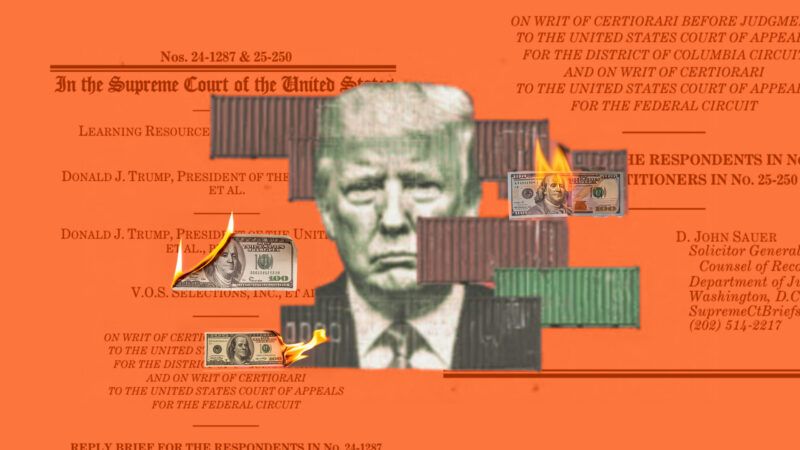
In a landmark 6-3 decision handed down this morning, the Supreme Court ruled that President Trump’s sweeping IEEPA tariffs are illegal. The ruling has immediate, “real-dollar” implications for millions of small businesses that have been quietly absorbing these costs for months.
The case, Learning Resources, Inc. v. Trump, was unambiguous: the International Emergency Economic Powers Act (IEEPA) does not authorize the President to impose tariffs. Full stop.
What were the IEEPA Tariffs?
Shortly after taking office in early 2025, President Trump declared national emergencies regarding drug trafficking and trade deficits. Invoking the IEEPA, a 1977 law designed for sanctioning foreign adversaries—he bypassed Congress to impose:
- A 25% duty on most Canadian and Mexican imports.
- A 10% “reciprocal” baseline tariff on almost every trading partner on Earth.
- Escalating rates on China, which eventually reached a staggering effective rate of 145%.
No president in the nearly 50-year history of the statute had used it this way. That “novelty” proved fatal to the administration’s legal defense.
The Core Ruling: Tariffs are Taxes
The legal argument was deceptively simple: Tariffs are taxes. Under Article I of the Constitution, only Congress has the power to tax.
Chief Justice Roberts, writing for the majority, noted that the Framers—fresh off a revolution fought over “taxation without representation” – were not in the habit of casually delegating the “power of the purse.” The Court invoked the Major Questions Doctrine, ruling that a power this consequential (affecting trillions of dollars) cannot be hidden in a few ambiguous words like “regulate importation.”
“The Congress shall have Power To lay and collect Taxes, Duties, Imposts and Excises.” – Article I, Section 8, Clause 1
3 Immediate Steps for Small Businesses
If you’ve been paying IEEPA tariffs, you’ve effectively been paying an illegal tax. Here is your roadmap:
1. Stop Payments (Carefully) The legal foundation for these tariffs is gone. However, do not simply stop paying without professional guidance. U.S. Customs and Border Protection (CBP) will need to issue administrative guidance. Coordinate with your customs attorney to ensure you aren’t flagged for non-compliance during the transition.
2. Audit Your “Liquidated” Entries Under 19 U.S.C. § 1514, you generally have 180 days from the date an entry “liquidates” to file a formal protest.
- Check for Protective Protests: Did your broker file “protective protests” over the last year? If so, your path to a refund is much smoother.
- Gather Documentation: Pull every customs entry and landed cost calculation that included an IEEPA tariff. You will need this paper trail for any bulk refund framework established by the government.
3. Distinguish Your Tariffs This ruling only applies to IEEPA-based tariffs. It does not affect:
- Section 232 (National security tariffs on steel/aluminum).
- Section 301 (Trade Act tariffs on Chinese goods from the first Trump term). Those remain legally enforceable.
The Bottom Line
For the toy makers and wine importers who led this suit, today is a total vindication. For everyone else, it’s a signal to act. The legal fight is over, and the businesses that move quickly to assert their refund rights stand to recover significant capital.
The Framers gave the power of the purse to Congress for a reason. Today, the Supreme Court reminded the executive branch why.