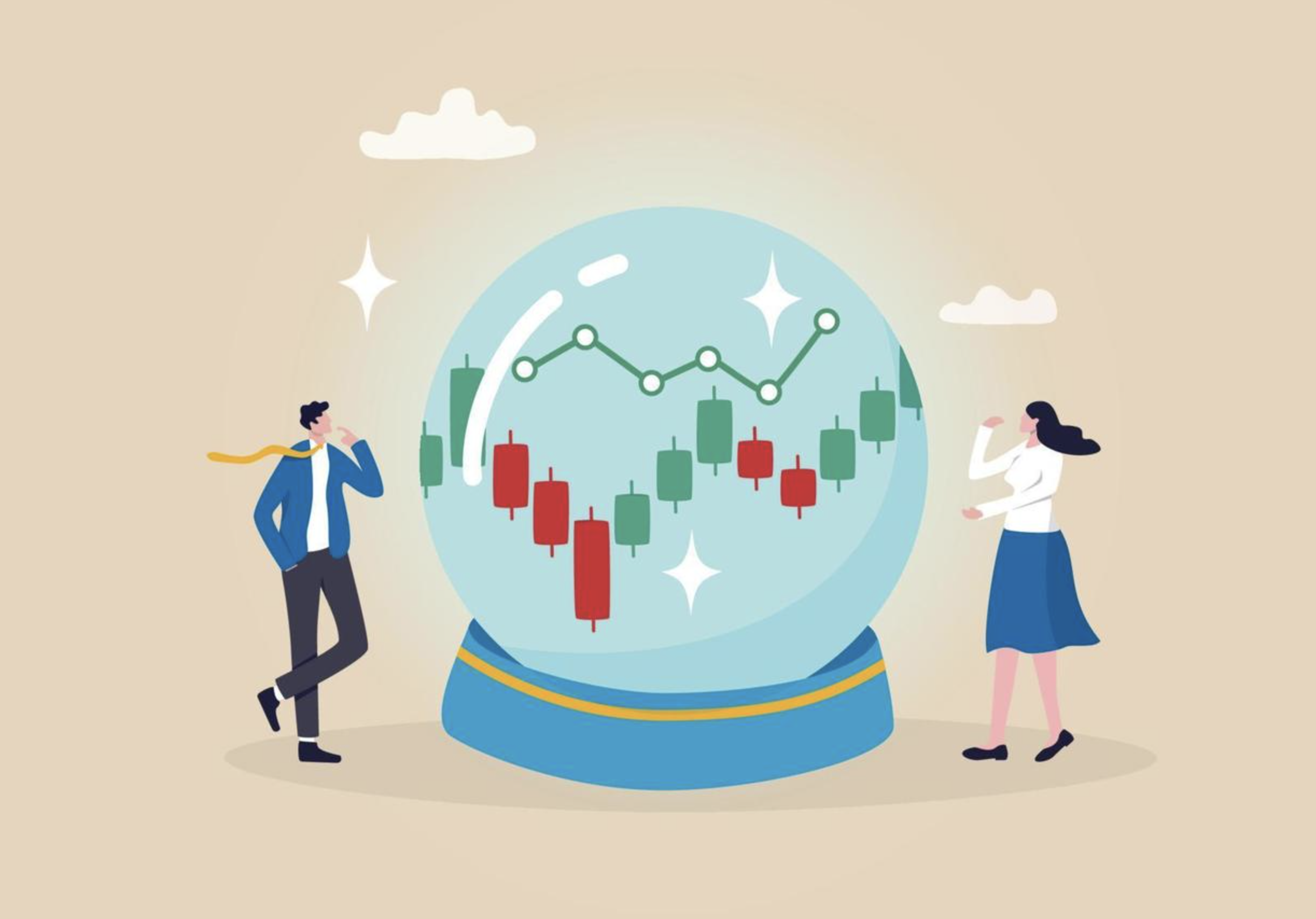
Imagine a world where you could trade on the future the same way you trade stocks today. Instead of buying shares of a company based on how well you think it will do, you could buy “shares” on whether a presidential candidate will win, whether the price of oil will rise, or even whether it will rain in Miami next Tuesday. That’s the essence of prediction markets, platforms that have exploded from academic experiments into billion-dollar ecosystems with massive implications for finance, government, technology, and even culture itself.
In this guide we’ll dive deep into what prediction markets are, where they came from, how they work, the major players today, and the controversies they’ve stirred. Whether you’re a curious reader, an investor, or someone who just likes knowing how the world ticks, consider this your Prediction Markets 101.
What Are Prediction Markets?
At their core, prediction markets are financial markets where contracts pay out based on the outcome of future events. Each contract represents a question (for example, “Will Candidate X win the 2028 election?”). If the event happens, the contract pays a set amount, typically $1, and if it doesn’t, it pays $0. The contract’s current price reflects what the crowd thinks the probability is that the event will occur.
So if a contract trading on whether a team will win a championship is priced at $0.70, that implies traders collectively think there’s a 70 percent chance of that outcome. These markets aggregate information and beliefs from all participants, effectively turning thousands of individual predictions into a single crowd-sourced probability.
This isn’t just betting, though it looks like it. On many platforms the price you pay isn’t a “bet against the house” but rather trading with other participants. In that way, prediction markets act similarly to stock or futures trading, except the underlying “asset” is a real-world event rather than shares of a company.
A Short History: From Papal Conclave to Polymarket
Prediction markets trace their roots back centuries. In 1503, people literally bet on who would become the next pope. By the 1700s, political betting was common in London coffee houses, and traders would place odds on changes in parliament or leadership.
The practice faded somewhat but reemerged in modern form when the first academic prediction market appeared in 1988 with the Iowa Electronic Markets, run by the University of Iowa to forecast U.S. elections. It often outperformed traditional polls, showing that markets could be better at crowd-sourced forecasting than expert surveys.
In the 2000s, commercial platforms like Intrade gained attention by offering real money trading on a wide range of event outcomes, but regulatory pressure eventually shut it down in 2013. Later entrants like PredictIt and blockchain-based markets such as Augur and Polymarket continued experimenting with different models.
What was once purely academic has become institutional. As of early 2026, platforms like Kalshi and Polymarket are handling huge volumes and drawing significant investment, indicating that prediction markets are no longer fringe experiments but real financial phenomena.
How They Work: Market Mechanics in Plain English
Here’s a stripped-down look at how most prediction markets operate:
- Choose an event. Traders browse markets on elections, weather, economics, sports, entertainment, or policy outcomes.
- Buy shares. Every contract has two sides: yes or no. If you think the outcome will happen, you buy “yes” shares; if not, you buy “no” shares.
- Market pricing adjusts. As more people trade, prices move up or down depending on supply and demand. Yes and no shares always sum to $1, reflecting the zero-sum nature of the market.
- Settlement. After the event resolves, winning contracts pay out at $1 each. If you predicted right, you profit; if not, you lose your stake.
Since the prices move in real time based on collective belief, and because traders put real money (or cryptocurrency, in some markets) on the line, prices tend to reflect a crowd’s best guess at future odds.
Major Players Today
These platforms come in a variety of shapes, from decentralized crypto platforms to federally regulated exchanges.
- Polymarket – A blockchain-based prediction market that lets users worldwide trade on outcomes ranging from politics to pop culture using cryptocurrency. It has become one of the most prominent decentralized platforms.
- Kalshi – A U.S.-based exchange regulated by the Commodity Futures Trading Commission (CFTC). It trades event contracts on everything from weather to sports and elections. Kalshi’s Super Bowl trading volume alone hit record levels, showing how mainstream these markets have become.
- Manifold – Started as a play-money forecasting platform and briefly experimented with real money; it remains an influential community forecasting platform.
- PredictIt – Once widely known for political markets, it operated under CFTC exemptions before facing shutdown; it remains an example of how regulation can make or break such platforms.
Why They Matter: The Good
These platforms aren’t just fun ways to stake money on future events. Advocates say they serve valuable functions:
- They synthesize information. Because prices adjust based on all available information, markets can act as real-time probability indicators.
- They can beat polls. Projects like the Iowa Electronic Markets have shown that markets can outperform traditional polls in forecasting election results.
- They help businesses and policymakers. Some companies use internal markets to forecast product launches or development timelines. Conceptually, systems like futarchy, where prediction markets help guide policy decisions, show how markets could play larger roles in governance.
The Risks and Controversies
Like any financial innovation, prediction markets have their critics and dangers:
- Regulation and legality. Depending on jurisdiction, these markets border on or overlap with gambling laws. Some states argue that platforms like Kalshi should be treated like sportsbooks rather than regulated exchanges, leading to ongoing legal battles.
- Insider trading and misuse. Recent arrests tied to misuse of classified information to bet on outcomes highlight the potential for predatory behavior and ethical concerns.
- Moral hazards. Betting on political or human events raises ethical questions. Critics worry that markets could encourage manipulation or create incentives to cause the outcomes you’re betting on, a problem that traditional wagering or other financial tools already struggle with.
- Market manipulation and legal uncertainty. There’s active debate about whether prediction markets should fall under state gambling laws or federal financial regulation. This regulatory mess makes investing and participation confusing for many people.
In response, lawmakers have proposed bills like the Public Integrity in Financial Prediction Markets Act of 2026, which aims to bar government officials from betting on events they influence to curb insider advantages.
What’s Next?
These markets are at a crossroads. They are increasingly visible, increasingly valuable, and increasingly regulated. Big financial and tech players are investing heavily, speculation volume is exploding, and legal frameworks are still evolving. These markets could become essential forecasting tools, or they could find themselves restricted by lawmakers worried about gambling spillovers and ethical concerns.
But whether you see them as gambling, finance, or information engines, prediction markets are redefining how we think about the future. They turn collective belief into measurable odds, and in doing so, they give us a kind of real-world probability thermometer, imperfect, expensive, and sometimes wild, but often insightful.
As with all tools for interpreting the future, the key is understanding both the promise and the peril. And with that, you’ve officially graduated from Prediction Markets 101.