Last Updated: October 15, 2026
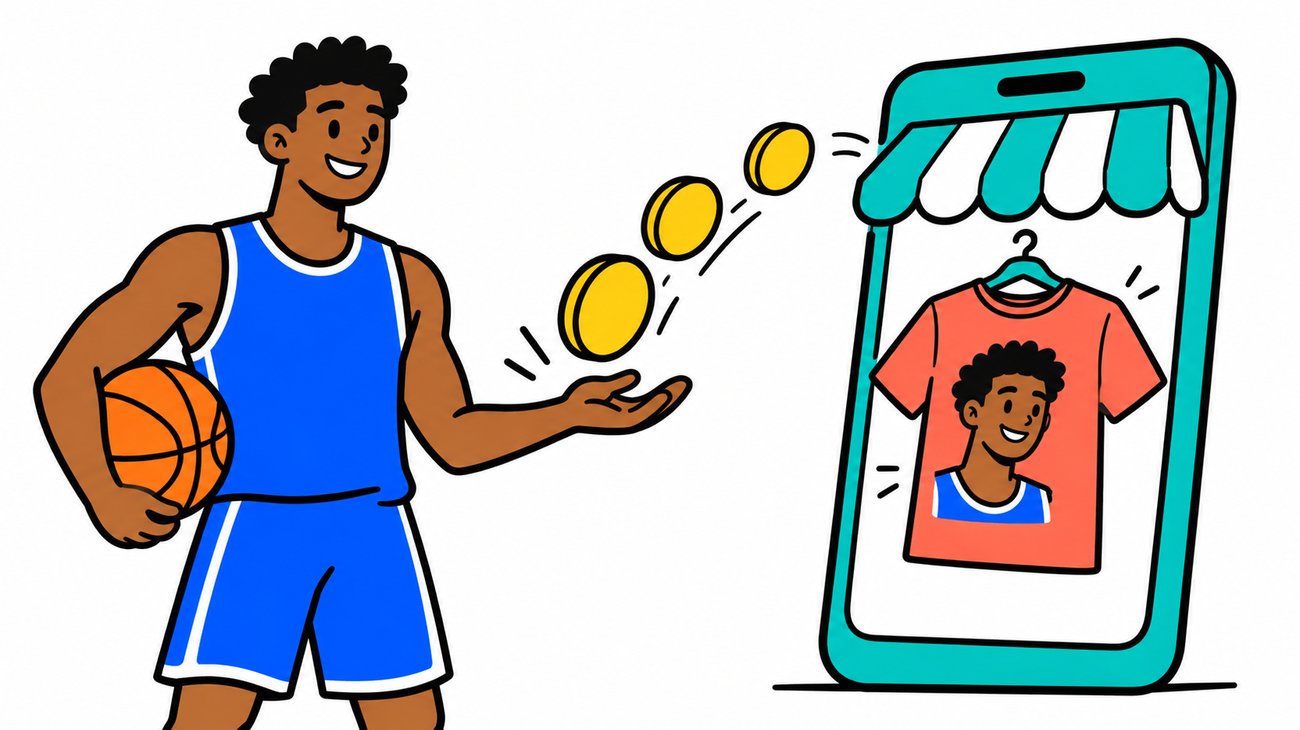
College athletes can earn money when fans buy shirts, hoodies, and other products that use their name or image. That makes NIL merch a clear example of the creator economy: build an audience, give people something they want, and earn a share of the sale.
For founders and small business owners, the model is worth a look. The athlete brings the fan base. A partner can handle the store, printing, and shipping. The key question is how much money reaches the athlete after each order.
What Is NIL Merch?
NIL stands for name, image, and likeness. NIL merch uses an athlete’s identity on products sold to fans, with the athlete’s permission and a deal that pays them.
A shirt might show a player’s face, name, or nickname. The fan gets something tied to a favorite athlete. The athlete earns a fee or a share of sales under the contract.
The NCAA’s interim NIL policy took effect on July 1, 2021. It let college athletes earn from these deals without losing their NCAA eligibility. That opened a path for them to sell products built around their own identity.
NIL does not give an athlete ownership of a school’s logo. A product that uses both a player’s identity and school trademarks needs the proper rights for each. A photographer may also own the rights to a photo used in a design.
Why This Looks Like the Creator Economy
A YouTuber sells shirts to viewers. A podcaster sells mugs to listeners. An athlete sells gear to fans. In each case, people buy partly because they feel a connection to the person behind the product.
The shirt still needs to fit. The print still needs to last. But the personal connection gives someone a reason to choose that shirt over a plain one.
This overlaps with influencer marketing. An influencer can help another company sell its products. With merch, that person’s own identity becomes part of the product.
There is one key limit: having a store does not mean owning the whole business. Under a royalty deal, the platform may set prices, collect customer data, and control the checkout. Those details matter if the athlete wants to build a lasting brand.
How the Platforms Handle the Work
The NIL Store and Athletes Thread sell products tied to college athletes. Their storefronts let fans browse by school or player rather than hunt for a separate website.
Depending on the deal, a merch partner may handle these tasks:
- Arrange school licensing and athlete permissions.
- Create designs and product pages.
- Print products and manage stock.
- Process orders, ship packages, and handle returns.
- Track sales and pay the athlete.
The athlete may approve designs and promote the shop. The exact duties belong in the contract. Outsourcing the work does not remove the need to check the product, payment terms, and required disclosures.
Creators can use a similar setup without the school license. For example, Printful’s print-on-demand service prints, packs, and ships products as orders come in. A creator can test a design without buying a pile of shirts first.
Print on demand cuts the risk of unsold stock. It does not make each sale free to fulfill. Product costs, shipping, store fees, and refunds still affect what the seller keeps.
What Does an Athlete Earn on a $45 Shirt?
A royalty is a payment for the right to use something, such as an athlete’s name or image. The percentage matters, but so does the amount it applies to.
These examples show how the same $45 retail sale can lead to three different payouts.
Contract wording | Royalty base | Athlete gets | Why it changes |
20% of retail | $45 sale price | $9 | Simple and easy to check |
20% of wholesale | $25 wholesale price | $5 | Retail price does not set the payout |
50% of profit | $12 stated profit | $6 | Costs decide what counts as profit |
These are made-up examples, not quoted platform rates. The $25 wholesale price and $12 profit are assumptions. Actual rates, costs, and deductions depend on the contract.
A promise of “20%” leaves the most useful question unanswered: 20% of what?
Ask whether discounts, refunds, school royalties, or other costs reduce the amount used to calculate your share. A profit-based deal also needs a clear list of allowed expenses. Otherwise, a higher percentage may pay less.
The money left with the seller is not all profit. It may cover the garment, printing, licensing, payment fees, returns, and overhead. If you run the store yourself, start with contribution margin to see what each sale contributes after variable costs.
Why the Model Works Beyond Star Players
A big play or tournament run can give fans a reason to buy. A ready-made store can help turn that interest into orders while people still care about the moment. Production and delivery still take time, so sellers need clear shipping promises.
The model also makes small audiences easier to serve. A platform does not need to stock every size for every athlete before it learns which designs sell. That creates room for more sports and players, though it does not guarantee meaningful income for each one.
School fans give athletes a starting audience. Creators may spend years building that reach. Both still face the same test: will followers become paying customers?
Do not confuse total NIL income with merch sales. School revenue sharing, endorsements, appearances, and product royalties are different sources of pay. A large headline about athlete compensation does not tell you how much fans spend on shirts.
What to Check Before Signing
Use these questions to compare merch deals. They also apply to creators and founders who license a brand.
1. How is pay calculated? Ask for a sample statement showing the sale price, deductions, royalty base, and your payout.
2. What rights are you granting? Check which products, images, sales channels, and uses the agreement covers. Confirm who clears school marks and photos.
3. Is the deal exclusive? Find out whether it blocks other apparel deals or conflicts with existing commitments.
4. Who controls the brand? Check design approval, pricing, artwork ownership, and access to customer data.
5. When do you get paid? Review payment dates, minimum payout amounts, refund adjustments, and your right to check sales records.
6. How does the deal end? Cover transfers, graduation, turning pro, remaining inventory, and continued use of your identity.
Division I athletes also need to follow NIL reporting rules. Third-party deals worth $600 or more generally must be reported through NIL Go. Smaller deals with the same payer can count toward that threshold. Check with the school’s compliance staff before signing.
Plan for taxes, too. The IRS says NIL income is taxable, including noncash pay. You must report it even if no tax form arrives. Self-employment tax may also apply. The right treatment depends on the work and facts of the deal, not just the label on a payment. Keep sales statements and expense records, and have a tax professional review the arrangement.
What Small Business Owners Can Learn
The useful lesson is to test demand before taking on inventory. Start with an audience, offer a product that fits, and use a partner where it makes sense. Then measure what you earn after the costs.
A merch platform can make selling easier. It cannot create fan loyalty for you or fix a weak contract.
For athletes, NIL merch creates a way to earn from the connection they have with fans. For founders and creators, it shows how an audience can support a product business when the rights, costs, and customer experience work together.