Updated: August 31, 2026
Since writing this piece based on the Forbes 2025 team values, it’s notable that the Los Angeles Lakers have been sold to Bob Iger and Josh Kushner for $12.5B, which is a $2.5B increase in value since last year.
Sports franchises have become the hottest asset class nobody’s talking about.
Source: Forbes annual rankings. Some intermediate values estimated from reported ranges. #1 team was Manchester United (2010-12) and Real Madrid (2013-15); Cowboys led every year from 2016 onward.
No matter the time of year, we’re all glued to our TV’s watching the NBA playoffs, NFL playoffs, F1 and European soccer. And all of these billions of fans and eyeballs are turning pro sports teams into massively valuable brands.
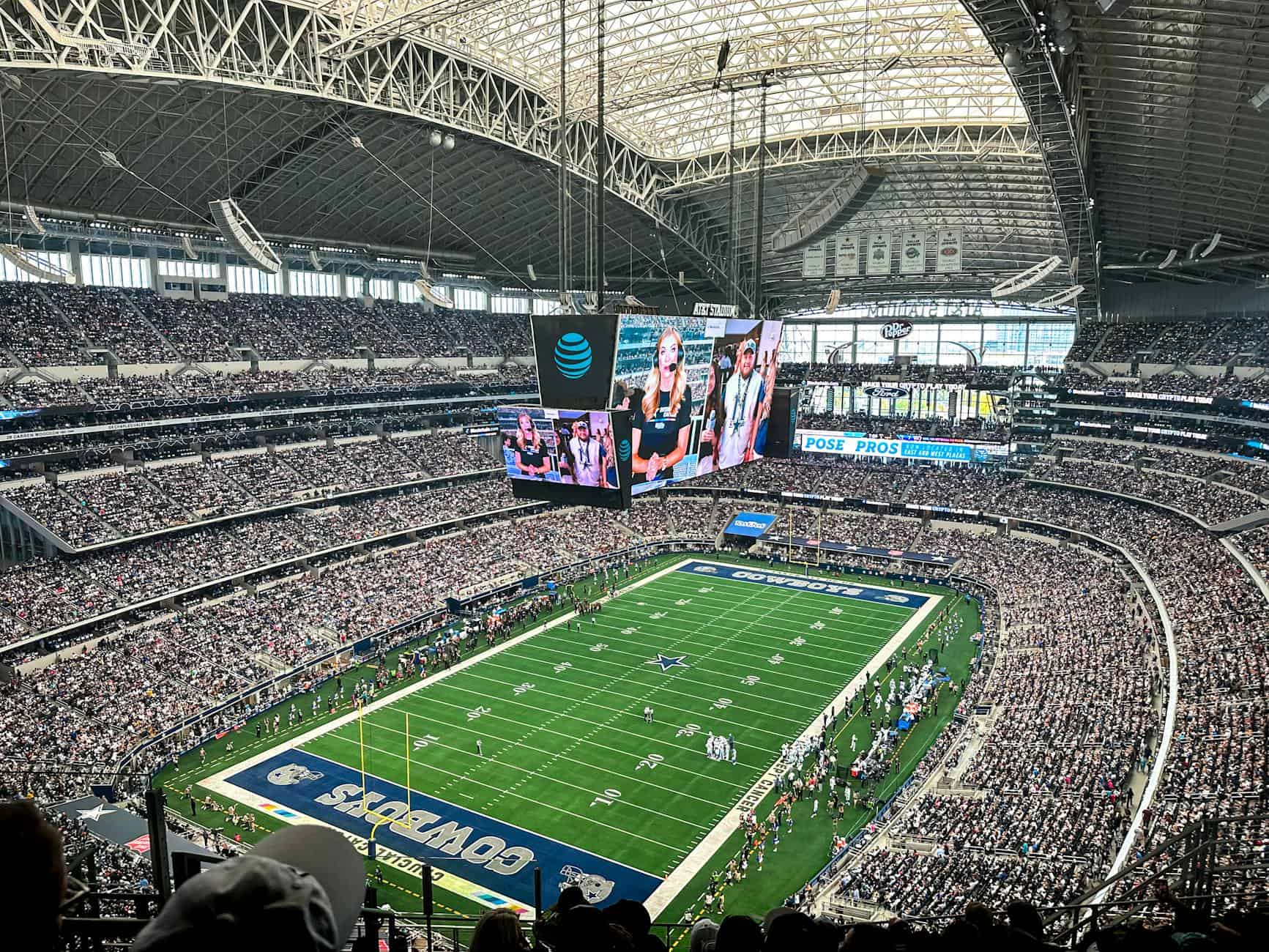
Consider the fact that Jerry Jones bought the Dallas Cowboys in 1989 for $150 million. Today, Forbes values that same team at $13 billion.
That’s an 8,567% return over 36 years, which annualizes to roughly 14% per year, compounding. Warren Buffett would approve.
The Cowboys top Forbes’ 2025 ranking of the world’s 50 most valuable sports teams, a list that reads like a portfolio stress test for billionaires. Together, those 50 franchises are worth more than $353 billion, up 22% from 2024, and more than double the collective value from just four years ago.
Let that last part sink in: the entire basket has more than doubled in four years.
The full ranking
Rank | Team | League | Value ($B) | Revenue ($M) | Revenue Season |
1 | Dallas Cowboys | NFL | 13.0 | 1,234 | 2024 |
2 | Golden State Warriors | NBA | 11.0 | 880 | 2024-25 |
3 | Los Angeles Rams | NFL | 10.5 | 764 | 2024 |
4 | New York Giants | NFL | 10.1 | 707 | 2024 |
5 | Los Angeles Lakers | NBA | 10.0 | 551 | 2024-25 |
6 | New York Knicks | NBA | 9.75 | 532 | 2024-25 |
7 | New England Patriots | NFL | 9.0 | 762 | 2024 |
8 | San Francisco 49ers | NFL | 8.6 | 723 | 2024 |
9 | Philadelphia Eagles | NFL | 8.3 | 688 | 2024 |
10 | Chicago Bears | NFL | 8.2 | 629 | 2024 |
The NFL’s financial moat is unlike anything in sports
Thirty of the 50 spots belong to NFL teams. That’s not a coincidence; it’s a structural advantage baked into the league’s model.
Every NFL franchise, regardless of market size or win-loss record, receives an equal share of national media revenue. The current TV deal, which runs through 2033, distributes roughly $9 billion per year across 32 teams. The salary cap sits at around $255 million per team. The math means even a bottom-dweller posting 3 wins generates profit.
Compare that to the NBA or Premier League, where revenue disparity between large and small markets is far more pronounced. The NFL’s economic floor is so high that the least valuable team in the league would rank near the top of almost any other sport.
The Cowboys operate in a different stratosphere even within the NFL. Last season, the franchise topped $1.2 billion in revenue. Only one sports organization in the world, Real Madrid, generated more. The Cowboys’ operating profit last year exceeded $629 million; no other NFL team comes close to half that figure.
The $10 billion club just got crowded
For most of sports history, a $5 billion valuation was the mountaintop. Last year, the Cowboys became the first franchise to crack $10 billion. This year, four teams cleared it: the Cowboys at $13 billion, the Golden State Warriors at $11 billion, the Los Angeles Rams at $10.5 billion, and the New York Giants at $10.1 billion.
The Warriors’ rise deserves its own note. Their move into Chase Center in San Francisco generated $2 billion from tickets, suites, and sponsorships before the team played a single game in the arena. The franchise now sits at $11 billion, up from roughly $450 million when Joe Lacob’s group bought it in 2010 for $450 million. That’s a 24x return in 15 years.
The Lakers round out the top five at $10 billion, giving the NBA five of the top ten most valuable franchises globally, which reflects the league’s aggressive international expansion over the past decade.
Soccer is losing ground to American leagues
European soccer clubs dominated these rankings through 2015. Real Madrid, Barcelona, Manchester United, and Bayern Munich regularly occupied the top spots. That era is fading fast.
In 2025, only four soccer clubs appear in the top 50: Real Madrid ($6.75B), Manchester United ($6.6B), FC Barcelona ($5.65B), and Liverpool ($5.4B). That’s down from seven just two years ago. Manchester City, Bayern Munich, and Paris Saint-Germain all dropped off the list entirely.
The issue isn’t that soccer clubs are declining in value. It’s that American league franchises are growing faster, powered by the NFL’s revenue-sharing model and the NBA’s global marketing engine. The Premier League has a massive TV deal, but it doesn’t fully close the gap.
Formula 1 is the wildcard
Two F1 teams appear on the list for the first time: Ferrari at $6.5 billion and Mercedes at $6 billion. Both are up 58% since 2023, driven by the sport’s remarkable audience growth in the United States following the Netflix “Drive to Survive” series and Liberty Media’s push into American markets.
F1 now hosts three races per year in the U.S. Las Vegas, Miami, and Austin each draw six-figure crowds and generate enormous media attention. The sport went from a European niche property to a mainstream American entertainment brand in roughly five years. The franchise valuations are catching up accordingly.
What’s actually driving the numbers
Three forces explain most of the growth in sports franchise values over the past decade.
Media rights inflation. Streaming wars created bidding wars for live sports content, the last remaining genre that audiences watch in real time and can’t easily skip the ads. The NFL’s next deal, when it comes up for renewal, is expected to dwarf the current one.
Stadium economics. New and renovated venues generate premium revenue streams that older facilities simply can’t match: naming rights, seat licenses, luxury suites, year-round event hosting. The Las Vegas Raiders’ move to Allegiant Stadium is the clearest case study; the franchise’s value more than doubled in roughly five years as a direct result.
Wealth concentration at the top. The number of individuals globally worth over $100 billion has grown dramatically in recent years. Sports franchises, particularly those with structural barriers to entry like NFL team licenses, are finite assets. When the universe of potential buyers grows faster than the supply of trophies for sale, prices go up.
The investor takeaway
For the entrepreneurs and angel investors who follow DailyDime, sports franchise investing has historically been one of the most consistent long-term wealth builders available to the ultra-wealthy, though the entry point is obviously the limiting factor.
That said, the broader lesson applies everywhere: scarcity plus growing demand plus recurring cash flows equals compounding value. The NFL understood this formula decades ago and built a business model around it.
The Cowboys are worth $13 billion not because Jerry Jones got lucky, but because he bought a scarce asset in a league that engineered every rule to make all of its franchises more valuable over time.
That’s not football. That’s private equity with a scoreboard.
Related Posts: Stadium Naming Rights | Golf Clubs on Tour | World Cup Paychecks | World Cup Lessons for Founders | Prediction Markets