Golf has a business story that goes well beyond selling more tee times. More people are playing, course supply is below its old peak, and big investors are buying clubs. That creates room for owners who can run courses better, fund repairs, or sell useful services to them.
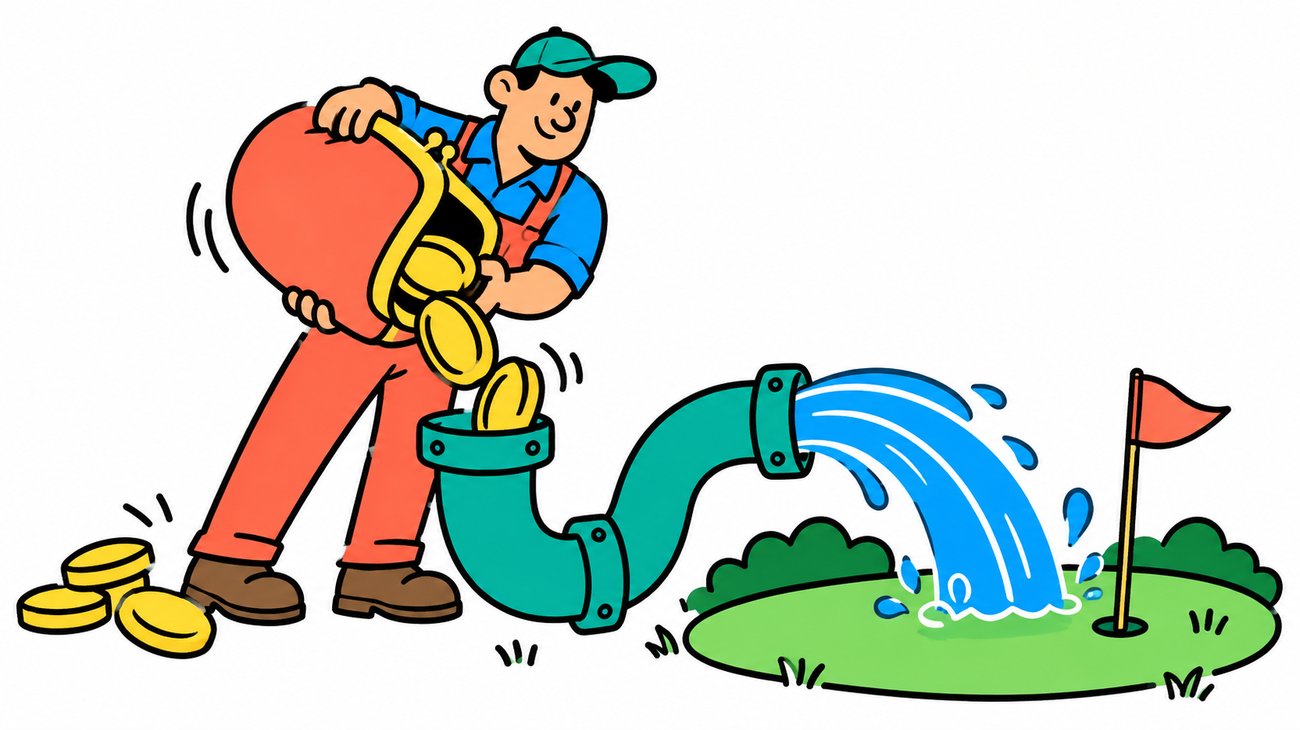
But a busy course is not the same as a good investment. The real test is how much cash remains after payroll, upkeep, debt payments, and the next round of major repairs.
For small business owners, the opening may be a local service company or simulator venue. You do not need to buy 18 holes to take part.
Why Golf Course Investing Is Drawing Capital
The National Golf Foundation reports that 48.1 million Americans age six and older played golf in 2025. That includes 29.1 million who played on a course and 19 million who played only at ranges, simulators, or other off-course venues.
Total participation set a record. On-course participation did not: its record was 30.6 million in 2003. Keeping those measures separate matters when sizing a market.
Americans played more than 500 million rounds in each year from 2020 through 2025. The U.S. ended 2025 with about 16,000 courses across 14,000 facilities. One facility can have several courses.
That is a strong demand base. It does not prove that every town needs another course or indoor golf venue. Local prices, open tee times, and repeat visits tell you more about your own market.
Why Buyers Want to Combine Courses
A rollup means buying several businesses and running them as a group. In golf, that can mean shared purchasing, booking systems, marketing, and management.
A group may negotiate better equipment prices or spread an accounting team across several clubs. It may also have money for repairs that a single owner has put off. This is one way business scale can lower costs.
The deals are real. Bain Capital acquired Concert Golf Partners from Clearlake in November 2025. Concert had 39 clubs. The announcement said revenue and profitability had doubled during Clearlake’s ownership, but did not disclose the purchase price.
KSL acquired Invited Clubs in June 2026. These deals show interest in golf businesses. They do not establish a fair price for a single local course.
Ownership also changes what a buyer can do. A member-owned club may need member approval. A municipal course may offer a management contract or lease instead of a sale. Managing a course is not the same as owning its land.
A larger group may sell for a higher multiple of profit, but that result is not automatic. Added staff, debt, and weak locations can eat up the gains. The deal should work without assuming the next buyer pays a richer price.
The Course Still Needs Cash
Capital expenditures, or CapEx, are purchases and major upgrades that last for years. For a course, that can include irrigation, mowers, carts, greens, and buildings. Routine mowing and repairs are operating costs. Replacing an irrigation system is a different bill.
Separate spending needed to keep the course running from spending meant to grow sales. A new practice area might attract customers. A worn-out pump may simply need replacing. Both need cash.
This is why EBITDA can mislead buyers. It measures earnings before interest, taxes, depreciation, and amortization. It does not subtract the cash spent on new equipment or major upgrades.
Here is a made-up example, not an industry average. It assumes no change in working capital, which is cash tied up in day-to-day operations.
| Annual cash-flow item | Amount |
|---|---|
| EBITDA | $600,000 |
| Equipment and upkeep CapEx | -$200,000 |
| Debt principal and interest | -$250,000 |
| Cash left before income taxes | $150,000 |
| Additional irrigation replacement | -$300,000 |
| Cash after replacement, before income taxes | -$150,000 |
The course reports $600,000 of EBITDA, yet the replacement leaves a $150,000 cash shortfall before taxes. That gap needs reserves, new borrowing, or owner capital. A low purchase price can hide an expensive repair backlog.
Ways to Enter Without Buying a Course
Sell a Service Courses Already Need
Equipment repair, irrigation service, lessons, and event support can serve several nearby clubs. Start with a problem owners already pay to solve. Check travel time, labor cost, insurance, and how often customers buy again.
Build Tools That Save Time or Fill Open Slots
Booking, staff scheduling, and membership tools can help operators. But a useful feature is not enough. Owners must be willing to switch systems and pay. Test whether the product saves staff hours or brings in bookings that would otherwise be lost.
Open a Smaller Golf Venue
A simulator studio can use far less land than a course. It still needs a buildout, equipment, rent, staff, and customers during quiet hours. Model paid bay-hours by time of day. A full Saturday night cannot carry an empty week by itself.
Large entertainment venues belong in a different cost model. Callaway completed the sale of a 60% stake in Topgolf and Toptracer, effective January 1, 2026, at an approximately $1.1 billion equity valuation. That deal is not evidence that a Topgolf-style venue is cheap to build.
Build a Local Group With a Clear Plan
Buying nearby courses may let an owner share staff, purchasing, and marketing. Start with a course that can stand on its own. Add locations only when the savings or added sales cover the extra management costs.
Match the Funding to the Work
Equipment loans and leases can spread out the cost of carts or mowers. Property financing may fit a land and building purchase. Equity can help fund repairs or growth that will take time to repay. Each source brings different costs and obligations, as our guide to startup funding explains.
A sale-leaseback frees cash by selling property and renting it back. It also creates rent payments. Moving the property off the balance sheet does not make its cost disappear.
Build a monthly cash plan before choosing the loan payment. A course in Ohio has a different winter than one in Florida. Annual profit can hide a cash shortage in the slow season.
What to Check Before You Commit
- Check local demand. Review several years of rounds, prices, membership renewals, and customer losses. Separate price increases from growth in visits.
- Inspect the assets. Get an independent review of irrigation, drainage, equipment, and buildings. Build a five-year replacement plan with current quotes.
- Test a weaker year. Model fewer rounds, slower membership sales, higher labor costs, and a major repair. Check whether cash still covers fixed bills.
- Check the property rights. Review the lease, permitted uses, water access, and limits on redevelopment. Do not assume golf land can become housing.
- Measure the cash left. Include a fair salary for the operator, upkeep CapEx, debt payments, and working capital. Do not rely only on the seller’s profit figure.
The next step is local: talk to course owners, find a costly problem, and price a solution. Golf’s demand gives you a market to study. The opportunity is a business that keeps customers and produces cash after paying for the course, equipment, or service those customers expect.
Related Posts: Most Popular Golf Balls | Never Too Late to Start | Golf Clubs on Tour | World Cup Lessons for Founders