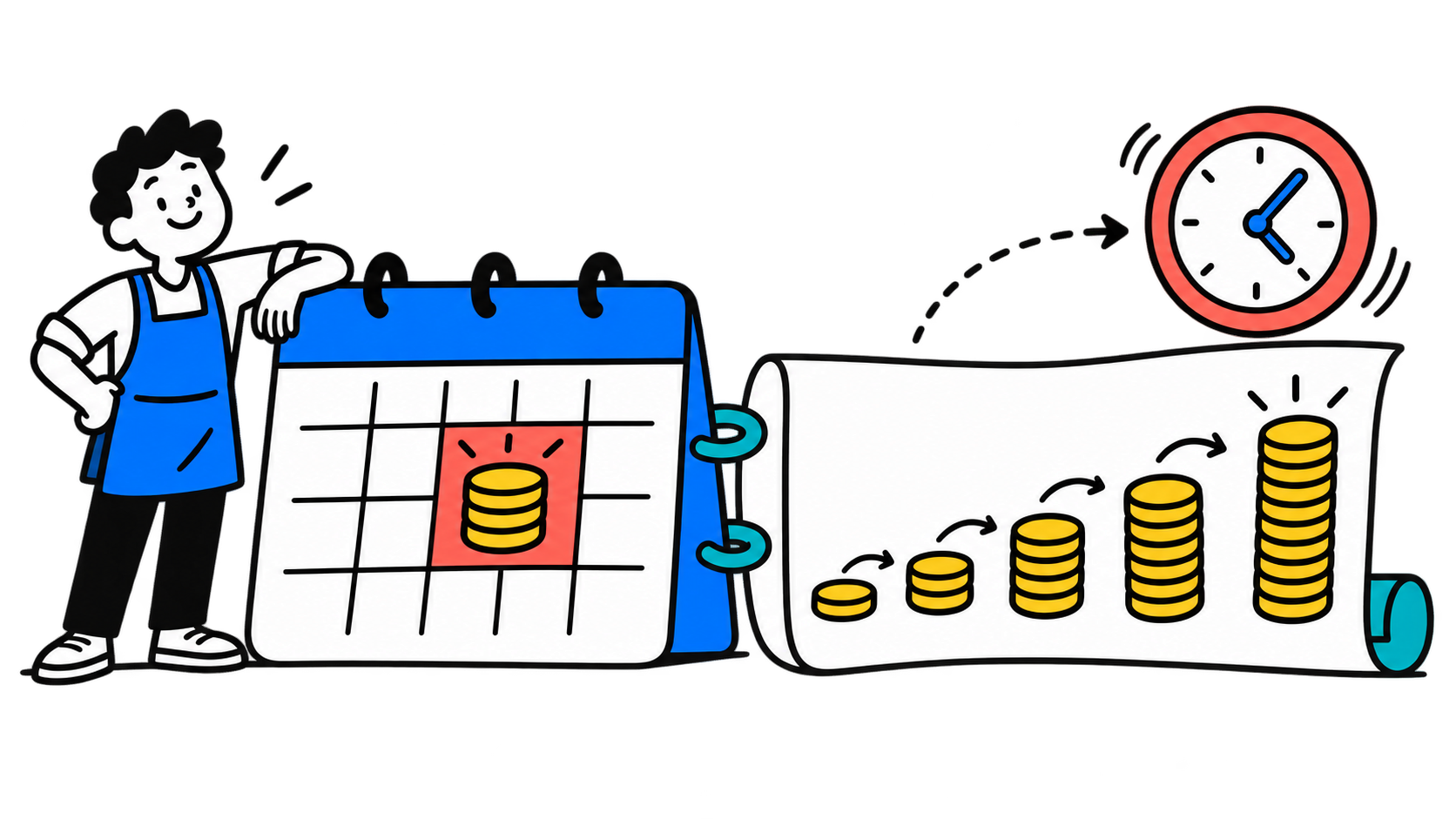
Current interest is the cost tied to a period. Accrued interest is the amount that has already built up but has not been paid.
They can be the same number on some dates. They can also be very different. That difference matters when you close the books, check cash flow, or ask a lender for a payoff amount.
The short answer
Interest often builds every day. The lender may collect it once a month. That gap creates accrued interest.
- Current interest usually means the interest tied to the current month, billing cycle, or payment.
- Accrued interest means interest that has built up and remains unpaid as of a specific date.
One warning: current interest is not a universal accounting label. One lender may use it for this month’s charge. Another may use it for the interest due on the next payment. Read the definitions on your statement or loan agreement before relying on the label.
What current interest means
Current interest is usually the interest cost for the period you are reviewing. That period may be a month, quarter, billing cycle, or payment period.
Say your March loan payment is $2,400. The statement applies $380 to interest and $2,020 to principal. The $380 is the current interest tied to that payment period.
It answers this question: How much did borrowing cost during this period?
What accrued interest means
Accrued interest is interest that has been earned by the lender but has not been paid by the borrower. It is measured on a specific date, such as today, month-end, or the payoff date.
For accrual-basis books, unpaid accrued interest usually appears on the balance sheet as interest payable or accrued interest payable. The matching interest expense appears on the income statement.
It answers a different question: How much interest has built up and is still sitting on the tab?
A simple accrued interest example
Your business has a $50,000 term loan at 6% annual interest. Assume the lender uses a 365-day year and the principal balance does not change during March.
- Annual interest: $50,000 × 6% = $3,000
- Daily interest: $3,000 ÷ 365 = about $8.22
- Accrued interest after 19 days: $8.22 × 19 = about $156
- Interest for all 31 days of March: $8.22 × 31 = about $255
On March 20, about $156 has accrued. By March 31, about $255 has accrued if you have not paid any March interest. In that case, March’s current-period interest and the accrued interest balance are both about $255.
The exact amount can change based on the loan’s day-count rule, payment timing, rate changes, and principal payments. Use the method in your loan agreement.
Accrued interest vs. current interest
Comparison point | Current Interest | Accrued Interest |
Plain meaning | Interest tied to the current period | Interest already earned by the lender but not yet paid |
Type of measure | A period of time | A point in time |
Main question | What did borrowing cost this period? | How much unpaid interest has built up so far? |
Common statement use | This cycle’s interest charge or the interest part of a payment | Interest since the last payment through the statement or payoff date |
Bookkeeping view | Interest expense for the period | Interest payable on the balance sheet, with matching interest expense |
Cash paid? | Maybe, depending on the payment date | Not yet |
The two numbers can overlap. If no interest was paid during March, the full March interest may be both the current-period expense and the accrued balance at March 31.
How accrued interest affects your books
Cash-basis books
Under the cash method, a business generally records and deducts interest when it pays the interest. An unpaid accrued amount may not appear as an expense on the cash-basis P&L yet.
That makes cash-basis books simple. It can also make one month look better if the payment falls in the next month, even though interest kept building.
Accrual-basis books
Under the accrual method, the business records interest as time passes. At month-end, it records the cost even if the lender will collect the cash next month.
Using the March example, the month-end entry would be:
- Debit Interest Expense: about $255
- Credit Accrued Interest Payable: about $255
When the business pays the lender, it debits accrued interest payable, debits loan payable for any principal paid, and credits cash for the full payment.
If debits and credits still feel backward, see DailyDime’s picture guide to debits and credits.
Why the difference matters for cash flow
Loan payoffs
A statement balance is not always the payoff amount. A mid-cycle payoff often includes principal plus interest accrued through the payoff date. Ask the lender for a dated payoff quote before sending money.
Lines of credit
A line of credit often accrues interest each day on the amount drawn. The accrued balance can rise fast when the draw stays high, even if no payment is due today.
Skipped or partial payments
Interest keeps building when a payment is late or short. Some agreements add unpaid interest to principal. This is called capitalization. Future interest may then be charged on the larger principal balance.
Month-end reporting
Your payment date and month-end rarely match. Accrued interest closes that gap. It shows what the business owes as of the reporting date, not just what left the bank.
Tax treatment of accrued interest
Federal tax timing usually follows the business’s accounting method. Under the cash method, expenses are generally deducted when paid. Under the accrual method, expenses are generally deducted when incurred, and interest accrues as time passes. The IRS accounting-method guide explains these rules.
For tax years beginning in 2026, the inflation-adjusted gross-receipts test is $32 million, based on average annual gross receipts for the prior three tax years. The IRS 2026 inflation-adjustment procedure lists the threshold. Meeting it may let a qualifying business use the cash method and may help it qualify for the small-business exception to the business-interest deduction limit.
That is not the whole tax rule. Tax shelters do not qualify for the small-business exception. Related-party interest and the Section 163(j) limit can also change the timing or amount of a deduction. The IRS has a small-business exemption overview with more detail.
This is not tax advice. Ask your CPA how your accounting method and loan terms apply, especially at year-end or when the balance is material.
How to keep the two numbers straight
- Read the label and the definition. Current interest can mean different things on different lender statements.
- Track principal and interest separately. The full loan payment is not an expense. Principal reduces the loan balance. Interest is the borrowing cost.
- Accrue the stub period. If you close monthly on accrual, record the interest from the last payment date through month-end.
- Get a payoff quote. Ask for principal and accrued interest through the exact payoff date.
- Watch for capitalization. If unpaid interest becomes principal, future interest may be charged on a larger balance.
Bottom line
Current interest is the cost tied to the period you are reviewing. Accrued interest is the unpaid amount that has already built up as of a specific date.
One tells you what borrowing cost during the period. The other tells you what is still sitting on the tab. A small business needs both to understand its profit, cash needs, and true payoff balance.