Tariffs 101: What Are They, How Do They Work, and Who Really Pays?
On April 2, 2025, the U.S. government announced a new round of tariffs, part of President Trump’s “Liberation Day.” These new tariffs hit a wide range of imported goods, from industrial components to things as simple as rubber dog toys. While they may sound like a win for domestic manufacturing, tariffs often create ripple effects that impact businesses, consumers, and the economy.
What Are Tariffs?
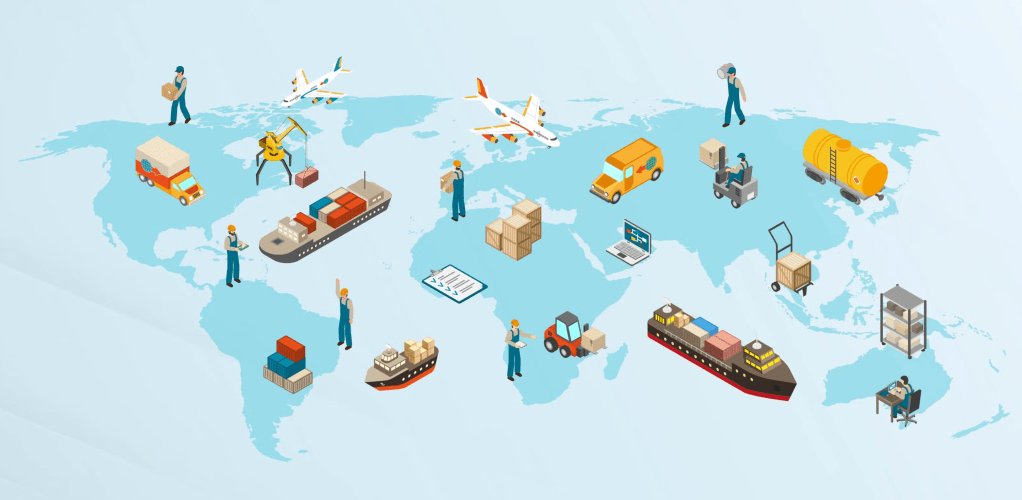
A tariff is a tax imposed by a government on goods imported from other countries. When a U.S. company imports foreign-made products to sell in the U.S., it must pay this tax. Specifically, tariff taxes are paid to U.S. Customs and Border Protection (CBP) and then are deposited into the U.S. Treasury.
Countries can impose tariffs on nearly any imported good. Sometimes tariffs are used to retaliate against another country’s trade practices, protect domestic industries, or raise revenue, but no matter the reason, someone always pays.
A Simple Example: ACME Dog Toys
Imagine a fictional company, ACME, that makes and sells dog toys in the U.S. They manufacture the toys in Brazil because of the country’s low-cost, high-quality rubber production. It costs ACME $10 to make each toy, and they sell them for $20.
Now, let’s say the U.S. imposes a 50% tariff on goods imported from Brazil.
| Cost to Make Toy | $10 |
| Tariff Rate | 50% |
| Tariff tax paid by ACME Company | $5 |
So, for every toy ACME imports, they must now pay $5 to the U.S. government.
How Tariffs Hurt Gross Margin
Here’s a quick look at ACME’s profit on each toy with and without the tariff:
| Category | No Tariff | 50% Tariff |
| Price to Customer | $20 | $20 |
| Cost of Goods | -$10 | -$10 |
| Tariff Tax | -$0 | -$5 |
| Gross Profit | $10 | $5 |
At first glance, $5 profit per toy might seem fine. But many companies rely on gross margins of 30 – 50% to cover all their other costs like payroll, rent, and marketing. A hit to margin this big can be a game-changer.
Ripple Effect on the Bottom Line
Let’s say ACME sells 1 million dog toys per year:
| Category | No Tariff | 50% Tariff |
| Sales | $20M | $20M |
| Cost of Goods | -$10M | -$10M |
| Tariff Tax | -$0 | -$5M |
| Gross Profit | $10M | $5M |
| Payroll | -$7M | -$7M |
| Rent | -$500k | -$500k |
| Insurance | -$500k | -$500k |
| Marketing | -$1M | -$1M |
| Net Profit | $1M | -$4M |
Before tariffs, ACME earns a solid $1 million in annual profit. After tariffs? They’re losing $4 million per year. This isn’t sustainable, so something has to give.
How Companies Can Respond
Here are ACME’s main options:
1. Move Manufacturing
They could try to make the toys in the U.S. but the cost would jump to $50 per toy. Even shifting to another low-cost country might only lower costs to $15 – $20. Brazil is still the cheapest, so moving is difficult.
2. Cut Expenses
They could lay off workers or downsize their office but most of their 70 employees are needed for sales, customer service, and operations. There’s little fat to trim.
3. Raise Prices
Most likely, ACME would raise prices from $20 to $25 to cover the tariff. That leads us to the consumer impact.
4. Eat the Cost
If ACME has high enough margins, which most product companies do not, they could absorb the expense and not change anything. They would just make less profit.
What Happens to Consumers?
Now ACME’s dog toys cost $25 instead of $20, a 25% increase. While $5 might not seem like much, imagine that same markup on:
- $50,000 cars
- $2,000 laptops
- $150 shoes
Multiply that across your household spending and it starts to feel a lot like… inflation.
A Quick Look at Inflation
Inflation is when the general price level of goods and services rises, eroding purchasing power. You’re paying more, but your income hasn’t increased, so your money buys less.
Mild inflation (2–3%) is normal. But 25% inflation on key goods, especially household necessities can hit middle-class families hard.
The Real Cause and Effect
When tariffs increase costs for businesses, those businesses often raise prices to stay afloat. Those price hikes are passed on to consumers. It’s not complicated:
Tariffs → Higher Business Costs → Higher Prices → Inflation
More Cons from Tariffs
Beyond inflation, tariffs create a range of additional problems:
Less Competition
Fewer imports means fewer choices. With lower supply and steady demand, prices rise even more. Consumers lose.
Favoritism and Lobbying
Big corporations can afford lobbyists to win tariff exemptions. Small businesses can’t. This leads to uneven playing fields and market distortions.
Supply Chain Complexity
Tariffs on individual components make it harder and more expensive to manufacture complex products like smartphones, appliances, and cars, many of which rely on global supply chains.
Lower Company Valuations
Public and private companies alike suffer from lower profits due to tariffs. That hurts shareholder value, stock prices, and employee bonuses or stock options.
Black Market Activity
Tariffs create incentives for illegal smuggling or unsafe products entering the market. Products that skip safety inspections (like toys with lead paint) could end up in consumers’ hands.
Pros for Tariffs
There are certainly some valid reasons to implement tariffs. In some cases a country wants to protect certain industries. For example, during the COVID-19 pandemic the U.S. was heavily reliant on masks and other supplies from foreign countries.
Tariffs can also be a tool to protect U.S. businesses from copyright infringement and IP theft. Here is a list of reasons when tariffs are a helpful tool.
- National security: Restricting trade with hostile nations like North Korea
- Pandemic resilience: Encouraging domestic production of medicine or PPE
- Geopolitical pressure: As leverage in negotiations
- Incentivize domestic manufacturing: If imported goods are too expensive due to tariffs, companies may eventually build manufacturing in the U.S.
But even in those cases, offering positive incentives (like tax breaks or subsidies) is often a better approach than punishing taxes.
For example, instead of taxing ACME $5 per toy, the government could help domestic manufacturers lower their costs through SBA funding, capital grants, or deregulation, encouraging U.S.-based production without raising consumer prices.
What Has Been the Impact of Trump’s IEEPA Tariffs So Far?
It’s been nine months since President Trump announced his Liberation Day tariffs and we now have real data to illustrate the impacts.
Tax Revenue
The U.S. has collected roughly $130 billion in revenue from the IEEPA tariffs Trump implemented on April 2, 2025. That is a positive because it generates revenue and helps the government pay down debt. However, the U.S. government collected $5.2 trillion in 2025 and spent $7.0 trillion, resulting in a deficit of $1.8 trillion. So, the $130 billion only covered 1.86% of the U.S. expenses in 2025.
Domestic Manufacturing Jobs
One of the common thoughts about tariffs are that they will help create domestic manufacturing jobs because the cost to produce in the U.S. will be cheaper because of the tariff taxes imposed on imported goods. However, in reality, approximately 73,000 manufacturing jobs have been lost in the USA since April 2, 2025, according to seasonally adjusted data from the Bureau of Labor Statistics (BLS). This seems counter-intuitive but the reason is we live in a global economy and the amount of inputs into U.S. goods is still in the billons.
Capital Investment
It would also reason that increasing tariffs would cause domestic companies to invest in manufacturing here in the U.S. While the Trump administration has touted “trillions” in investment, that’s simply not true. The reality is that CapEx is a long-term expenditure and if a company is unsure of whether or not the tariffs will stand, or change, they can’t rely on hopes and dreams. Businesses need certainty.
Geopolitics
Tariffs can be used to shift geopolitics by forcing the flow of goods to change. Part of the rationale behind the IEEPA tariffs was to re-shift the geopolitics into America’s favor. The result however is that many countries, including Canada, Mexico and China are relying more on other trade partners because of the uncertainty resulting form Trump’s IEEPA tariffs.
Final Thoughts
Tariffs are an economic tool but a blunt one. While they might offer short-term political wins, they almost always raise prices, reduce competition, and hurt both companies and consumers.
The better long-term strategy? Lower tariffs, increase fair competition, and support domestic production through innovation and smart incentives, not taxes.
If the U.S. wants more domestic manufacturing, leadership should come up with a domestic industrial policy to incentivize companies to make investments.



 DailyDime
Leave a comment